

| Strategy
| Execution
| Results
M&A Growth Strategies
Growth strategies are purposeful frameworks organizations use to expand market reach, boost revenue, and elevate performance. These strategies vary widely, from deepening market penetration and advancing product innovation to exploring diversification and forging strategic alliances. Crafting a successful growth strategy begins with a thorough understanding of market dynamics, customer expectations, and competitive positioning, enabling a swift response to shifts in the business landscape. Companies may opt for organic growth by innovating and enhancing customer engagement or pursue inorganic expansion through targeted mergers and acquisitions. Regardless of the approach, effective growth strategies are anchored in a clear vision, aligned with core strengths, and backed by the resources and talent necessary to achieve impactful, measurable outcomes. Through disciplined execution, businesses can not only grow but excel amid evolving industry challenges.
Start here: Post-merger integration: strategy, operating model, and the first hundred days
Go deeper: M&A integration costs: what they are, what they run, and how to control them
-
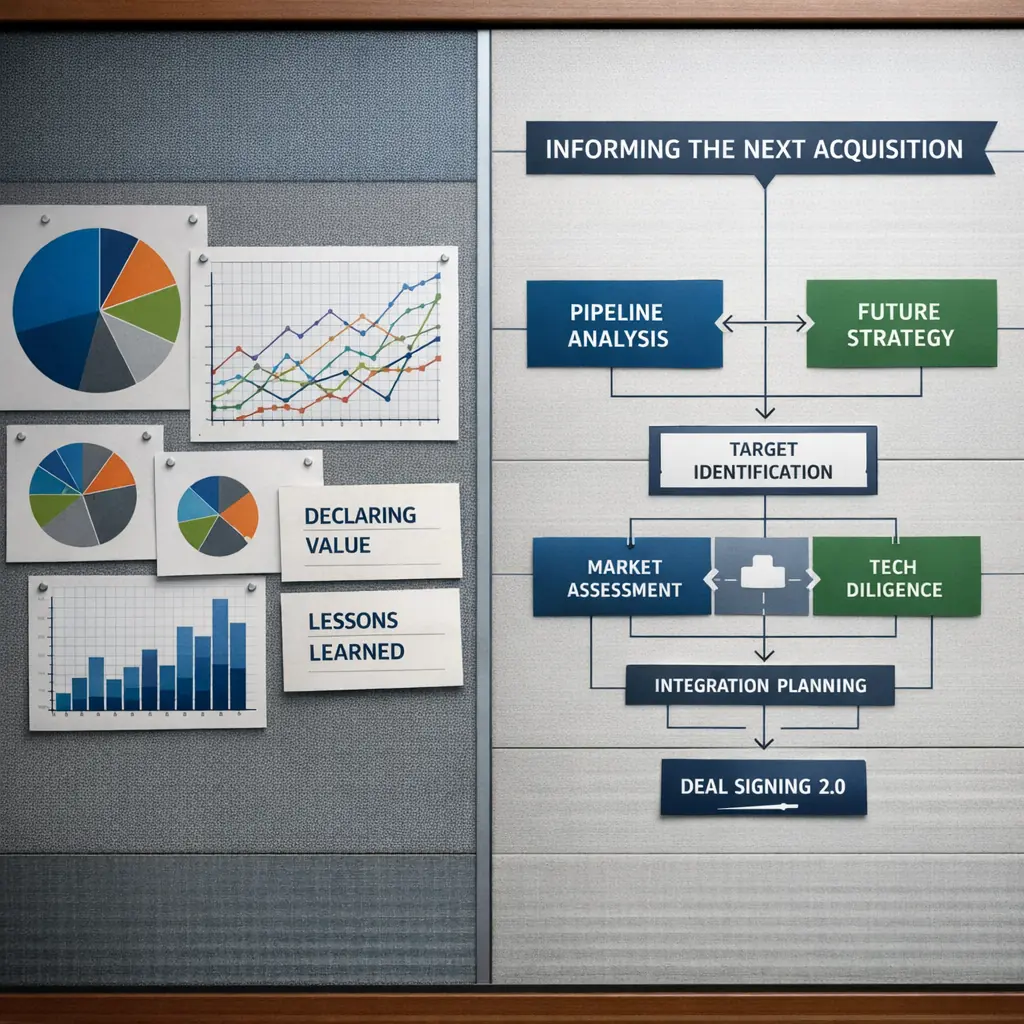
Declaring Value Without Declaring Victory: Measuring Outcomes and Informing the Next Acquisition
Measuring outcomes in m&a starts with Day One readiness, an auditable IMO, and a four value-dimensions declaration framework that links actions to durable value.
-
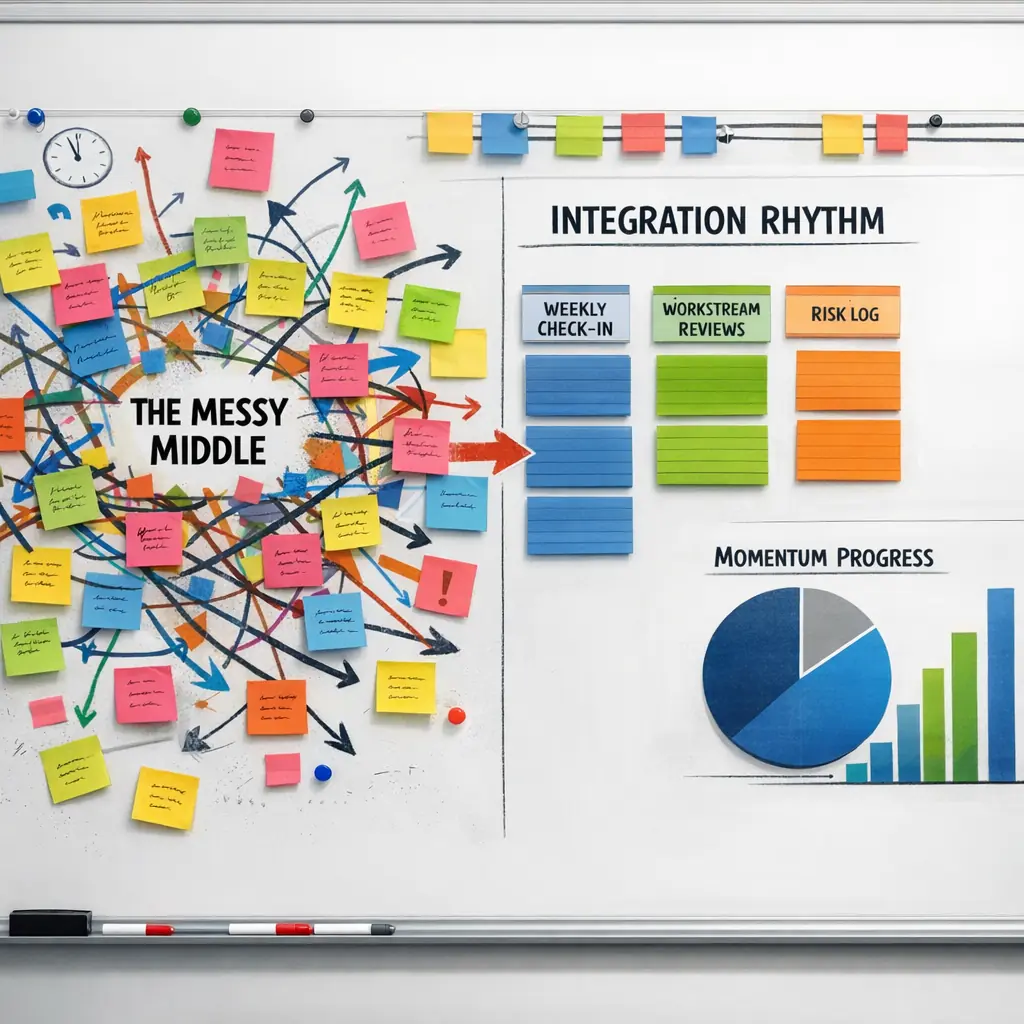
The Messy Middle: Maintaining Momentum Through a Structured Integration Rhythm
A structured Integration Management Office rhythm for maintaining momentum by gating milestones, surfacing risks, and turning Day One readiness into ongoing value realization.
-

Day One Is a Promise, Not a Milestone: Building Trust Through Go Live Governance
Day One trust hinges on go-live governance that links pre close readiness to post-close execution through a centralized IMO and clear ownership.
-

Stand Up an IMO Early: Designing a Minimal Viable Integration Management Office for a First Deal
Design a minimal integration management office to ensure Day One readiness and faster value in fast moving M&A through a bounded charter, cadence, and artifacts.
-

You Signed the Deal. Now What? Activating the Between Close Window to Create Early Value
This four week IMO driven sprint frames the between-close window value toward Day One readiness, showing how governance and wins translate plans into value.
-

Closing the Loop: Sustaining Clarity and Alignment from Corporate Strategy to Acquisition and Integration
Outlines how an Integration Management Office ties strategy to Day One execution and ongoing value across Go-to-Market, Product and Engineering, and Corporate Services.
-

Integrating Corporate Services: Finance, HR, Operations, Legal and the Shared Services Model
A disciplined Integration Office anchors integration across finance, HR, operations, and legal to deliver scalable, compliant shared services post close.
-

Integrating Product and Engineering: Roadmaps, Architecture, and Delivery Across the Combined Tech Stack
How to align roadmaps, architecture, and delivery in a merged tech stack through IMO governance, Day One readiness, and disciplined cadence.
-

Integrating Go-to-Market: Aligning Sales, Marketing and Customer Success under the IMO
Outlines how to align sales, marketing and customer success under an Integration Management Office to deliver a unified GTM and sustained revenue velocity.
-

Strategic Alignment Across M&A: From Corporate Strategy to Integration Strategy
Explores how an Integration Management Office links corporate strategy to acquisition and integration plans to unlock value through disciplined cross-functional alignment.