Integrating Corporate Services: Finance, HR, Operations, Legal and the Shared Services Model
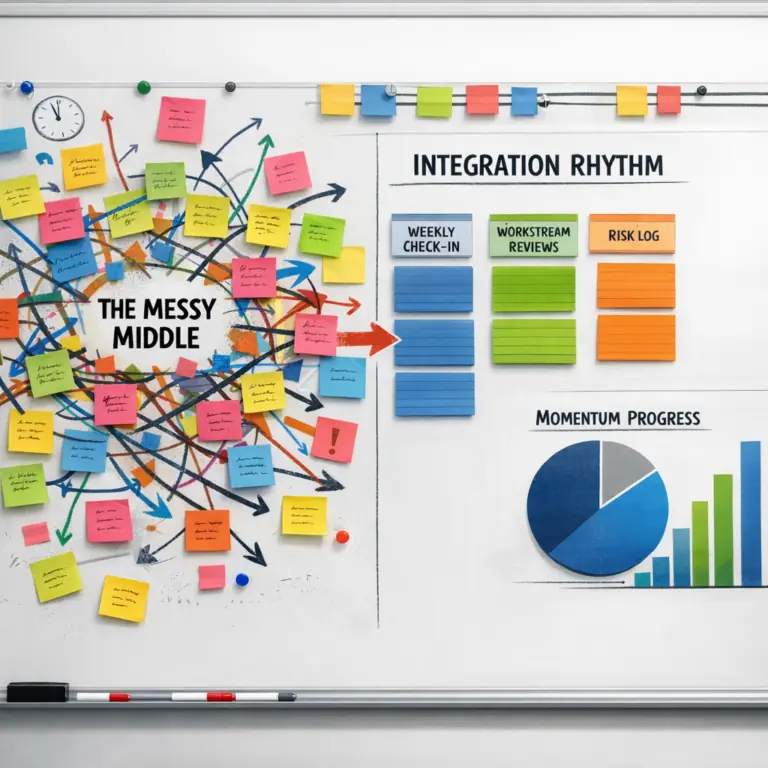
In 2016, the the $67 billion Dell-EMC deal closed, launching a post-close program to integrate a sprawling enterprise portfolio. Dell Technologies began harmonizing finance systems, HR processes, and IT infrastructure that had operated under separate governance regimes. Executives sought rapid cost synergies while risking slower product cycles if centralized controls overrode local needs. An Integration Management Office assumed a central coordinating role, directing cross-functional workstreams and enforcing a disciplined governance cadence. Early indicators suggested that back-office integration could become the bottleneck even as front-office value acceleration gained momentum.
Back-office functions remained stubbornly siloed as finance, HR, operations, and legal often operated under divergent policies and systems, creating friction, duplicate processes, and inconsistent controls. Regulatory and geographic diversity amplified risk when entities, tax structures, and HR policies diverged. Without a governance framework and a scalable operating model, the anticipated synergies from centralized services could be delayed or diluted. How can finance, HR, operations, and legal be integrated into a scalable shared services model that delivers back-office synergies and maintains rigorous compliance across geographies during post-close integration?
This disciplined, IMO-led approach to back-office integration forms the backbone of successful synergy capture. The work relies on clearly defining the scope of shared services, standardizing policies and controls, and aligning entity structures around a common platform, with a cadence that maintains explicit decision rights. Prior analyses on integration discipline framework and total cost of acquisition anchor these steps. The framework translates these principles into concrete workstreams and sequencing that the Integration Management Office can own across diligence, planning, and execution.

Defining Back-Office Integration Boundaries
Defining back-office integration boundaries requires clarity on which Finance, HR, Operations, and Legal processes will be centralized through the Integration Management Office and which will remain embedded in the operating units. The Integration Management Office serves as the coordinating hub that aligns governance, policy, and controls with the deal thesis; boundary design reduces duplication, minimizes rework, and accelerates Day One readiness. A US$50 billion multinational consumer goods company designed and cultivated an M&A integration team across finance, HR, and IT to drive the transformation. The pattern also shows how autonomy can coexist with structure in major deals; for example, the IBM Red Hat deal autonomy kept Red Hat operationally independent to protect its open-source culture, while the Dell-EMC integration portfolio pursued a unified portfolio approach to reduce back-office fragmentation. This constellation points to a simple rule: boundary definitions matter as much as the operating model itself, and an architecture blueprint for integration guides the mapping of teams, workflows, and accountability. The anchoring also aligns with the integration discipline framework and the total cost of acquisition, ensuring that boundary choices translate into measurable value.
Anchoring back-office boundary decisions to the IMO creates a governance rhythm that keeps plans aligned with the target operating model. External perspectives reinforce this design; a high-growth, multi-national integration team model across finance, HR, and IT is a recurring pattern in large deals designed to accelerate transformation and value capture, as highlighted in Evolution of shared services. The utilization of a centralized backbone delivers speed without eroding critical local capabilities, while the governance cadence reduces rework and clarifies accountability for cross-functional handoffs. In practice, the IMO becomes a centralized command center that maintains momentum across diligence, planning, and execution, avoiding bureaucratic bloat while preserving strategic agility.
Operationalizing the boundary map begins with a baseline capture of current policies, systems, and controls in Finance, HR, Operations, and Legal. This baseline feeds a future-state requirements set that the IMO orchestrates into a cohesive target operating model. A fit-gap analysis identifies where standardization, harmonized systems, and shared controls are most appropriate, while permitting local autonomy where risk or regulatory variance dictates. The future-state architecture should be documented as a clear blueprint that assigns teams, workflows, and accountability to prevent drift; the architecture blueprint for integration guides the sequence from diligence through value capture. The shared services model serves as a practical reference point for consolidating operations into a centralized unit that serves multiple parts of the organization, eliminating duplicated efforts and preserving essential local nuance where necessary. A crucial implication is that centralized back-office design can yield meaningful productivity improvements, as reflected in corresponding research on shared services and automation.
Day One readiness hinges on disciplined governance, a robust baseline, and an explicit plan for cadence and escalation. Boundary clarity translates into faster decisions, improved risk management, and unmistakable accountability as integration shifts from diligence to value capture, with the real test lying in whether the defined boundaries scale across geographies and regimes while delivering measurable productivity and strategic advantage.
Navigating Governance Gaps and Compliance
Governance gaps between finance, human resources, operations and legal create cross-functional bottlenecks that slow decision-making during integrations. Siloed functions translate into repeated handoffs, misaligned priorities, and delays in addressing critical issues that derail value capture. When operations span multiple jurisdictions, regulatory and compliance differences demand harmonized policies and transparent controls. The Intel-Mobileye acquisition illustrates the value of preserving operating autonomy to protect a distinct franchise; governance at the edge can sustain velocity. Research on global shared services shows 62% using a global business services model and 83% serving more than one country, underscoring why cross-border alignment is a prerequisite for speed to value.
Regulatory and jurisdictional differences demand harmonized policies and transparent controls, or risk and compliance gaps accumulate across the deal continuum. Fragomen emphasizes that immigration compliance and related regulatory domains must operate within a shared governance framework to manage risk and reputational exposure across borders. In multinational configurations, process owners and global process owners are common; ScottMadden finds 64% use process owners for global governance, 83% serve more than one country, and 62% rely on a global business services model. These patterns point toward a practical convergence: coordinated cadence and explicit decision rights reduce friction when moving from diligence to execution. Executives should consider aligning policy baselines across finance and operations with Day One readiness to ensure the deal thesis translates into measurable value. For GTM governance patterns, see the linked industry analysis discussion on how governance structures align strategic objectives with day-to-day operations.
Speed to value requires a scalable, repeatable operating model that can adapt post-close. A disciplined approach translates strategy into action through clear boundaries, escalation paths, and measurable outcomes. The Cisco-Splunk acquisition illustrates the scale of this challenge, as integration spans networking, security and observability domains requiring coordinated priorities across product, IT and security teams. Shared services literature reinforces that centralizing support into a coherent operating model accelerates decisions and reduces duplication; Topdesk’s exploration of the shared services model highlights the benefits of consolidating function-specific support into a single, organization-wide entity. Executives should link KPI-driven transformation governance to GTM governance patterns to enable apples-to-apples comparison across deals and units. For context on governance patterns in practice, see the prior industry analysis analysis on GTM governance.
Harmonized policies and transparent controls enable scale across geographies and regimes, turning pre-close diligence into post-close productivity. The Dell-EMC integration demonstrates the magnitude of cross-portfolio alignment required across large portfolios, while the IBM-Red Hat and Cisco-Splunk cases underscore that governance must support federated execution rather than flatten distinct capabilities. The governance dialogue is not abstract: immigration governance and global process ownership are practical levers that correlate with faster decisions, lower risk, and stronger stakeholder alignment across finance, HR, and IT. The real test lies in translating these patterns into a repeatable operating model that sustains value long after close.
Establishing Shared Services Framework
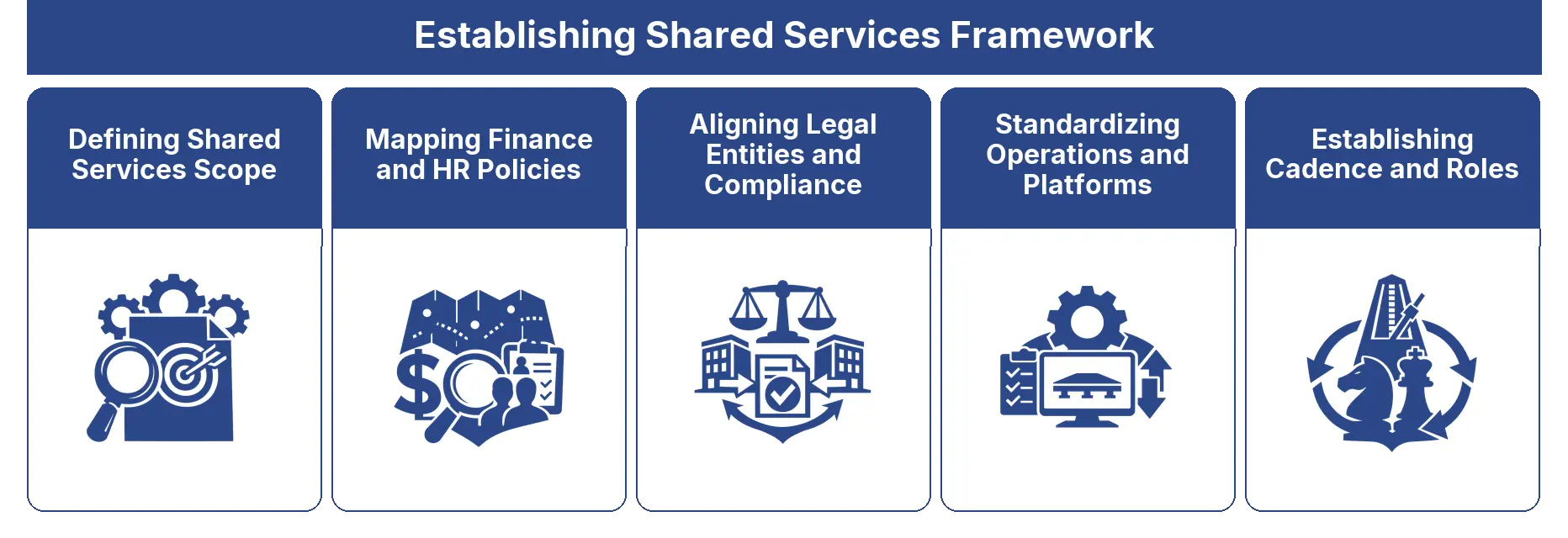
A Shared Services Framework for corporate services begins with a precise scope. The objective is to consolidate non-core, repetitive processes across finance, human resources, information technology support, and procurement into a centralized center that serves the entire organization, while preserving local agility for diverse geographies and regimes. External research emphasizes that centralization under a unified umbrella creates end-to-end service delivery and cross-functional collaboration, reducing duplication and raising service levels across the enterprise, a pattern described in the Shared Services Organization model. The governance patterns seen in major acquisitions illustrate the value of federated execution: centralized policy and controls, paired with distributed day-to-day operations; Cisco-Splunk governance pattern shows this balance in practice. This structure gains strength when the center maintains a clearly defined charter, a formal service catalog, and explicit decision rights aligned to business outcomes. The case for a unified Shared Services Organization is reinforced by findings on efficiency and scale in real-world deals and cross-functional research documented by industry sources. Internal precedents underscore the importance of grounding the design in proven playbooks, such as the blueprint for M&A success.
Defining Shared Services Scope
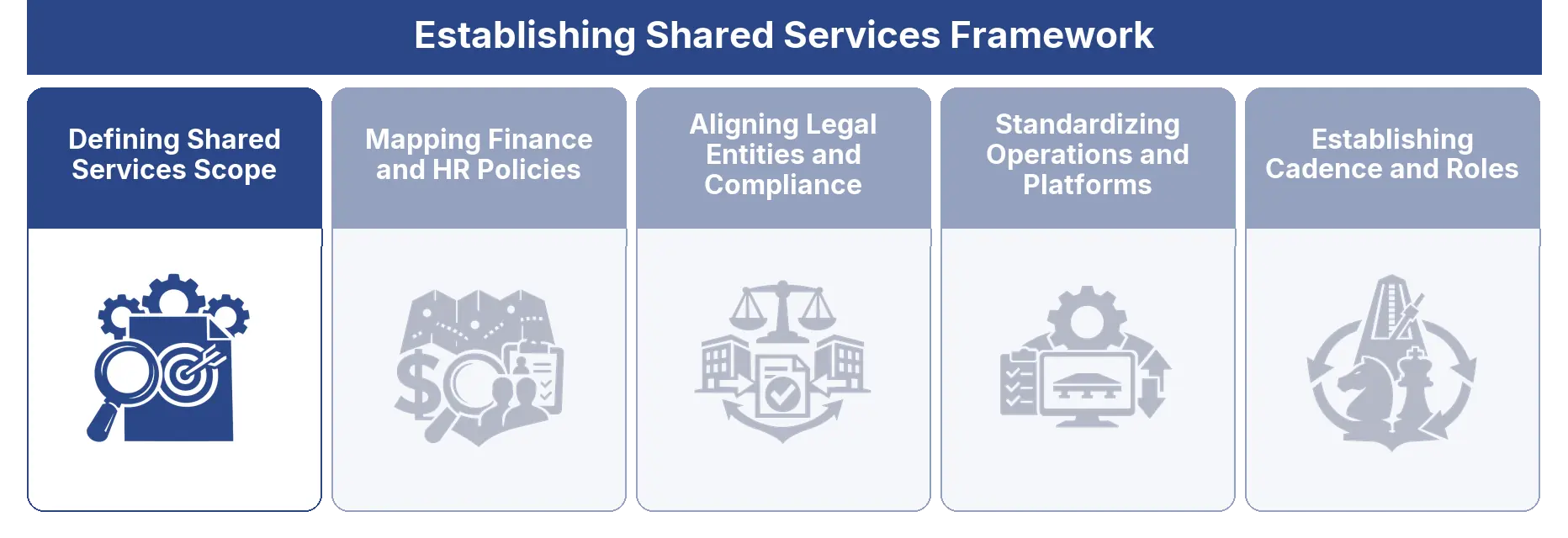
Defining scope is the first, critical act in any shared services effort. The operating principle is to catalog services, map touchpoints, and establish which processes will be centralized versus colocated in business units. The objective is to avoid scope creep while ensuring critical back-office activities gain scale and consistency. A well-scoped design translates into a clear service catalog, explicit ownership, and measurable service levels, which in turn enables faster decision rights and fewer handoffs. Public deals demonstrate the consequence of scope clarity: when governance frameworks sharply delineate what sits in a shared services center, delivery accelerates and rework drops toward zero. The framework gains credibility from lessons embedded in public deal governance patterns and the emphasis on federated execution described in industry sources. For reference, the blueprint for M&A success has long emphasized starting with a precise scope and a formal design for day one operations, a principle anchored in prior industry analysis analysis.
Mapping Finance and HR Policies
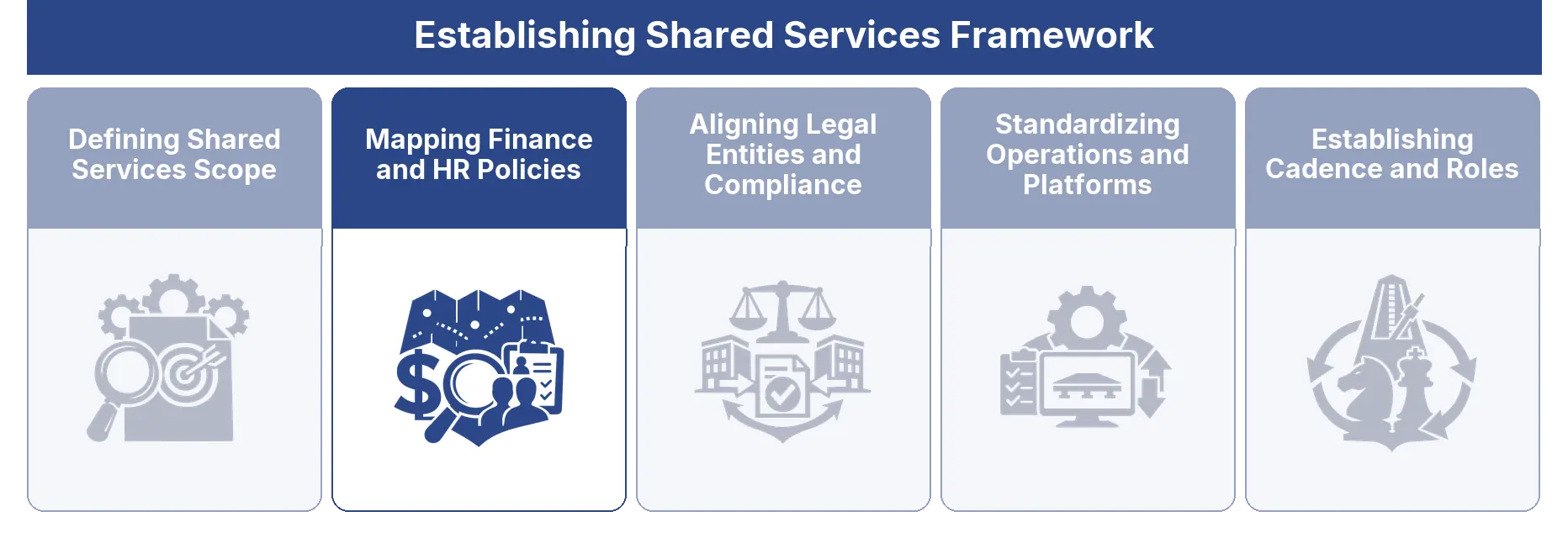
A consistent policy backbone across finance and human resources is central to scale. The process begins with aligning core policies on chart of accounts, payroll and benefits, cost allocations, and intercompany remittance. The goal is to harmonize policy language and process steps so that a single set of controls governs the entire enterprise, with exceptions clearly documented where local laws demand them. Public research highlights how centralized policy, when paired with standardized processes, yields predictable outcomes across geographies, while preserving local compliance where required. The practical implication is a standardized policy, process pair that reduces variance in financial reporting, HR data integrity, and vendor management. An explicit policy map helps finance and HR leaders avoid misalignment during rapid growth or cross-border activity, and supports faster, auditable Day One execution. This framing aligns with the integration discipline and the broader governance playbook referenced in earlier industry analysis work on M&A integration discipline.
Aligning Legal Entities and Compliance
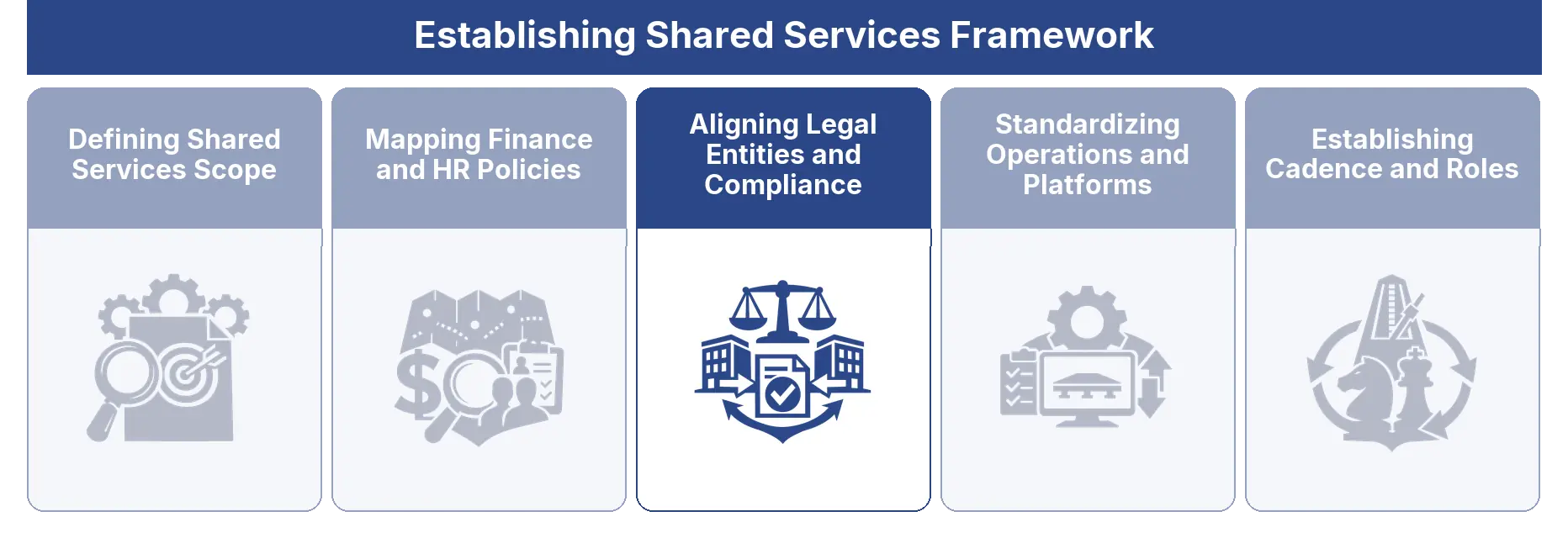
Legal entity alignment focuses on how entities are structured, taxed, and regulated so that the shared services model can operate without creating compliance bottlenecks. The aim is to minimize redundant legal entities, standardize intercompany arrangements, and harmonize data privacy and regulatory controls across the enterprise. In practice, this often requires a deliberate and transparent mapping of ownership, jurisdictional licenses, and contract administration to a centralized service framework while preserving the autonomy needed for certain local markets. A number of public deals illustrate this balance between centralized governance and local execution, including large-scale corporate restructurings where entity alignment underpinned scalable shared services delivery. For example, Disney’s approach to preserving brand and culture while integrating operations across acquisitions offers a cautionary tale about maintaining coherent policy and compliance strands across entities. See the long-standing literature on shared services structures for a broader perspective.
Standardizing Operations and Platforms
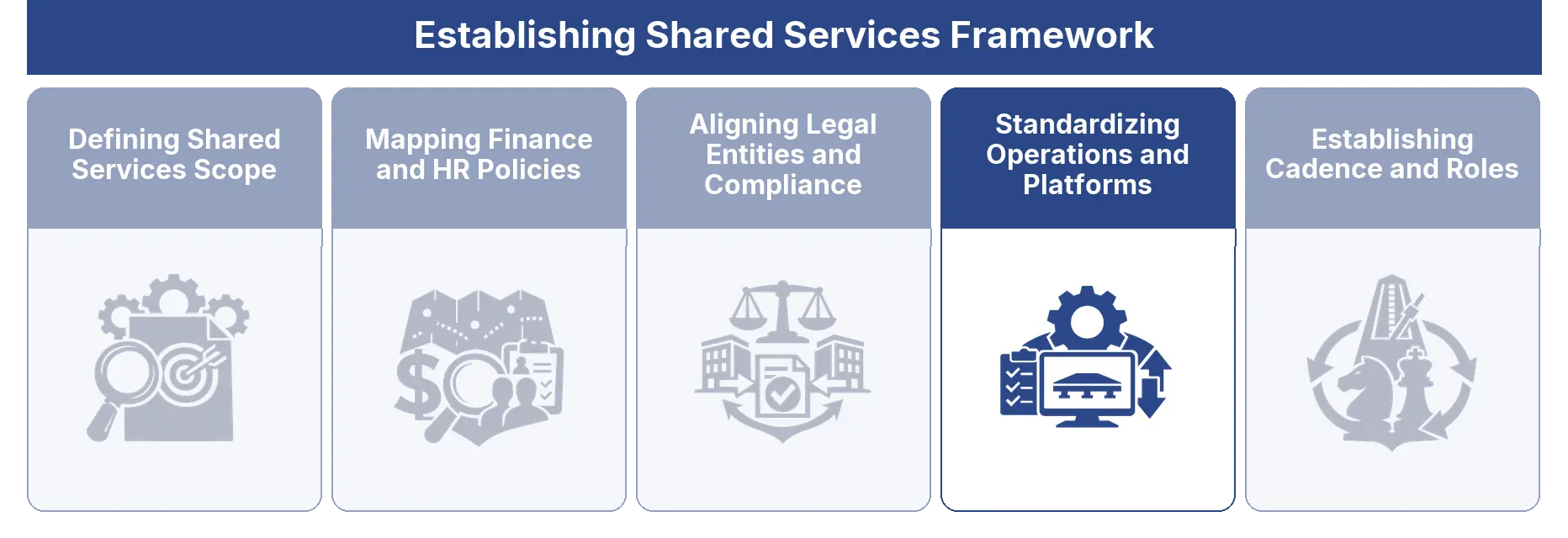
Standardization centers on adopting a common set of platforms, processes, and data definitions so that back-office work flows are repeatable and auditable at scale. This includes harmonizing ERP, HRIS, procurement systems, and master data management to eliminate silos and reduce manual handoffs. Public sources describe the common benefits of standardized operations as faster cycle times, lower error rates, and easier cross-border support. The practical implication is the design of an operating model with a clearly specified platform stack and data governance framework that enables consistent reporting and analytics across the organization. Centralization does not mean uniformity in every location; it means unified standards that allow local adaptations within a governed framework. The case for standardization is reinforced by external research that positions a centralized shared services model as a driver of efficiency and customer satisfaction, anchored by concrete platform and process commonalities.
Establishing Cadence and Roles
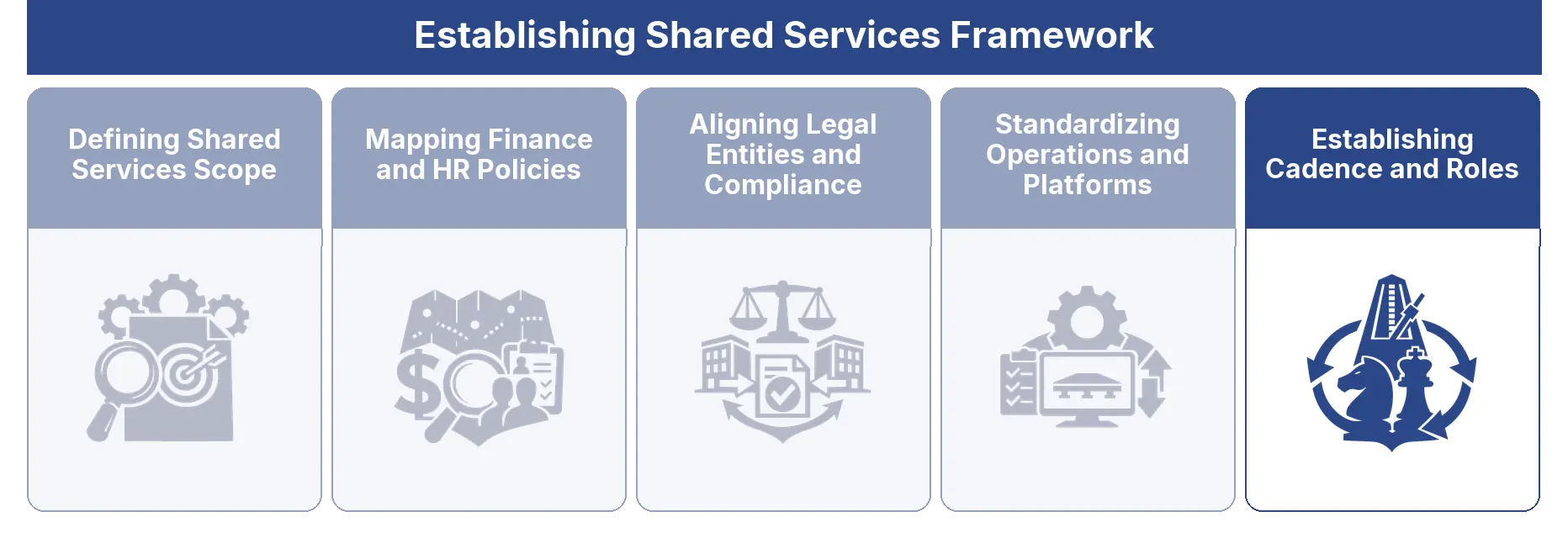
A disciplined cadence ties governance to execution. Typical cadences include weekly status updates on IT and shared-services workstreams, monthly governance reviews, and quarterly performance benchmarking against service levels and financial targets. Clear roles, such as center-of-excellence owners, process stewards, and regional execution leads, prevent ambiguity and enable faster decision-making. Enterprise architecture and organizational structure perspectives frame the governance backbone as a structured, scalable cadence that coordinates multiple functions across finance, HR, IT, and procurement. Real-world practice shows that cadence matters; well-timed reviews and accountable owners reduce friction and accelerate synergies. This is supported by the broader literature on centralized services and organizational alignment, which underscores the importance of defined roles and steady, transparent governance routines.
Harmonizing Strategy-to-Execution Alignment
Clarity in back-office boundaries defines speed and value in corporate services, establishing a Shared Services Framework that clearly designates which Finance, HR, Operations, and Legal processes will flow through the Integration Management Office and which will remain embedded in the operating units. When governance gaps exist across finance, human resources, operations and legal, cross-functional bottlenecks slow decision-making and erode integration value. The risk is value drift rather than delivery. A five-dimensional assessment roadmap keeps transformation grounded in reality by linking scope to operational readiness, financial framing, market dynamics, technology architecture, and cultural fit, drawing on the blueprint for M&A success to sharpen the decision set and the comprehensive TCOA analysis in M&A.
On Monday morning, the disciplined practitioner begins execution by locking the scope into a robust separation plan for non-centralized processes and units, ensuring IT, finance, HR, operations, and legal interfaces align with the post-close organization design. An Integration Management Office transitions into day-to-day operations, and governance across corporate services is codified with clear accountabilities, service levels, and decision rights. A disciplined approach also embeds integration costs in valuation from day one, preserving economic realism and guiding prudent investment. The Perpetual Evolution Mindset drives ongoing experimentation, updating the five-dimensional map as market, product, and customer needs shift.

Get new articles by email
Insights on M&A, revenue growth, and business transformation, delivered occasionally.