Closing the Loop: Sustaining Clarity and Alignment from Corporate Strategy to Acquisition and Integration
In 2017, Intel acquired Mobileye for about $15.3 billion and ran it with operational autonomy, later returning it to public markets while retaining control. The integration discipline blueprint guides value capture. The arc from acquisition through autonomous operation to a renewed listing shows a deal thesis being managed, measured, and revisited over years rather than quarters. Sustaining that discipline requires cross-functional alignment long after Day One, where drift between strategy, governance, and execution first creates friction in value delivery.
Drift tends to surface when pre-close plans are not fully operationalized for Day One, governance cadences fail to keep pace with integration needs, and ownership is blurred across functions; cost of acquisition analysis often underpins these dynamics. Siloes between go-to-market, product, and services produce misaligned priorities, slow decision cycles, and inconsistent measurement. How can a thorough understanding of integration costs enhance the valuation and success of an acquisition?
This moment demands a disciplined, end-to-end operating model that connects corporate strategy to Day One execution. As regulatory pressure, private equity dynamics, and product complexity intensify, governance, cadence, and value metrics become a strategic imperative. The Integration Management Office serves as the central thread linking strategy to realized synergies across Go-to-Market, Product & Engineering, and Corporate Services. The coming framework links strategy, deal criteria, Day One, and ongoing value delivery.

Aligning Strategy with Acquisition Cadence
Aligning Strategy with Acquisition Cadence begins with a direct line from corporate strategy to acquisition criteria and post-close architecture. When strategic priorities drive investments, deal criteria follow, guiding target selection toward capabilities that expand the platform, accelerate go-to-market, or unlock data advantages. The Dell-EMC merger of 2016, a $67 billion transaction, illustrates how the target architecture must dovetail with an overarching platform strategy to sustain value after close. The Disney-Pixar deal underscores how strategic intent can constrain integration choices to preserve core cultural and creative dynamics. For practitioners, this alignment is not an afterthought but a design principle, a pattern captured in Bridging the Gap in M&A.
Operational orchestration rests with the Integration Management Office, which coordinates post-signature work streams across Day One readiness, future-state design, and ongoing governance. Leading practice calls for accelerating pre-deal integration planning where feasible, so Day One delivers value rather than a scramble. The Salesforce-Slack integration demonstrates how a deliberate cadence anchors cross-functional work across a platform, enabling faster adoption and clearer accountability. The approach is reinforced by established change-management frameworks such as the Prosci ADKAR model, which emphasizes stakeholder engagement, transparent communication, and structured adoption during complex transitions, a topic discussed in Revealing the Tangible Costs.
Baseline governance cadence and clearly delineated decision rights set the tempo for the lifecycle. Cadence is a mechanism for value realization, not a ritual; weekly status reviews and cross-functional decision points are a common construct in strategy-aligned programs. The disciplined sequence is highlighted in The 10 Steps to Successful M&A Integration, which identifies pivotal decisions about operating models, footprints, and R&D roadmaps as cross-functional anchors. The risk of value erosion remains real; up to 70% of value erosion can occur during the integration phase, underscoring the need for early planning and measurable milestones, a point echoing wider industry analyses that tie cadence to execution discipline. Mastering Post-Merger Integration offers additional perspectives on keeping the deal thesis connected to daily execution.
Establishing the governance charter for the IMO and aligning it with ongoing value delivery creates a durable cadence that endures through leadership turnover and market shifts. Executives should codify Day One commitments, clarify data ownership, and set quarterly review rhythms to sustain alignment across the lifecycle. Public deal patterns such as the Dell-EMC and Salesforce-Slack trajectories demonstrate that governance and cadence are design choices, not afterthoughts. See Bridging the Gap in M&A, Revealing the Tangible Costs, and Mastering Post-Merger Integration for deeper articulation of how strategy translates into sustained value delivery.
Resolving Cross-Functional Tensions
Cross-functional tensions within deal programs commonly arise from three drift sources: Day One readiness gaps, ownership ambiguity, and cadence lags. When Day One commitments are not codified, critical functions race ahead without a shared launch plan, leaving the organization vulnerable to post-close disruption. Ownership ambiguity breeds duplicate work and gaps in accountability, especially where GTM, product, and corporate services intersect. Cadence gaps, missed weekly reviews, unclear escalation paths, and slow decision cycles, magnify these defects into stubborn execution frictions. The consequence is a frayed integration program, where silos across GTM, product, and corporate services pull in different directions, draining momentum and value creation. The situation resembles a relay team with blurred baton handoffs rather than a synchronized unit.
External evidence reinforces the point. Cross-functional alignment, as Forrester notes, yields meaningful outcomes when marketing, sales, and other functions align around buying groups, including a 2.3x increase in deal size and a 17 percent lift in closed-won rates. The risk of misalignment is large; Bain reports that 83% of failed acquisitions point to integration problems as the root cause, reframing diligence as an operating discipline. Yale’s exploration of an integration framework in programmatic acquisitions underscores the value of a structured approach to pre-deal planning and Day One readiness. In practice, greater cadence and formal governance consistent with an IMO-led cadence accelerate execution, particularly when cross-functional teams share a single view of priorities. Patterns from prior industry analysis work stress the human and process dimensions of this effort, including Navigating the Human Side, Blueprinting the Future State, and Mastering Post-Merger Integration. These threads connect theory to practice for bridge-building across organizations: Navigating the Human Side, Blueprinting the Future State, and Mastering Post-Merger Integration.
Five elements underpin the IMO-led alignment across deals: Mapping Strategic Intent, Clarifying Decision Rights, Aligning Governance Cadence, Defining Value Realization Metrics, and Establishing Issue Escalation. Each pillar translates into concrete operating discipline across GTM, Product, and Corporate Services: a single map of strategic intent informs governance, explicit ownership clarifies who decides what, cadence is synchronized through formal reviews, metrics anchor behavior, and escalation resolves cross-functional frictions before they derail value realization. The practical effect is a measurable acceleration of value delivery, even as leadership, market conditions, or regulatory considerations shift. The real test is sustaining this alignment as circumstances evolve, ensuring the discipline endures beyond the initial integration surge.
Implementing IMO-Led Alignment Across Deals
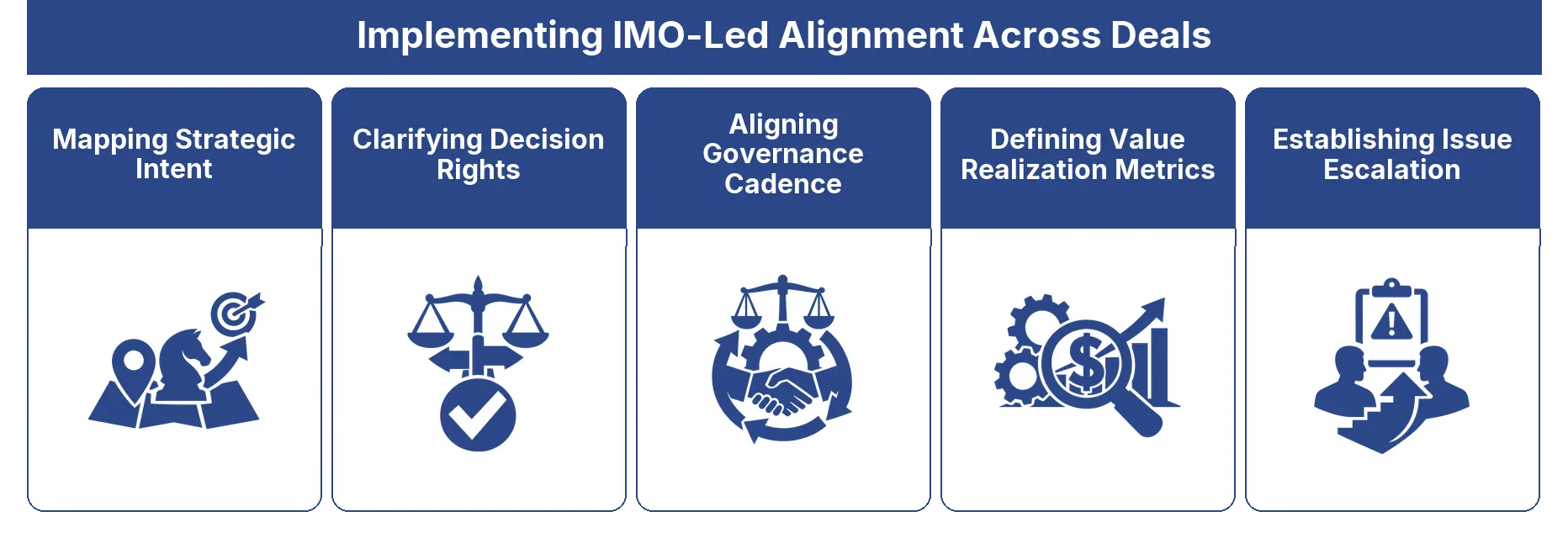
Implementing IMO-Led Alignment Across Deals requires a disciplined, end-to-end approach that codifies governance across the deal continuum, defines Day One readiness as a baseline for ongoing value delivery, institutionalizes cross-functional cadence and escalation, and standardizes value metrics and reporting across GTM, Product/Engineering, and Corporate Services. The Integration Management Office (IMO) acts as the central coordinating node, translating the deal thesis into a synchronized operating model that binds diverse functions to a shared plan. This structure enables faster decision cycles, clearer accountability, and a rigorous mechanism for tracking value realization from Day One onward. The approach draws on established governance playbooks and aligns with prior industry analysis analyses on the imperative of the IMO and blueprinting the future state for strategic success. Imperative of the IMO Mastering Post-Merger Integration
Mapping Strategic Intent
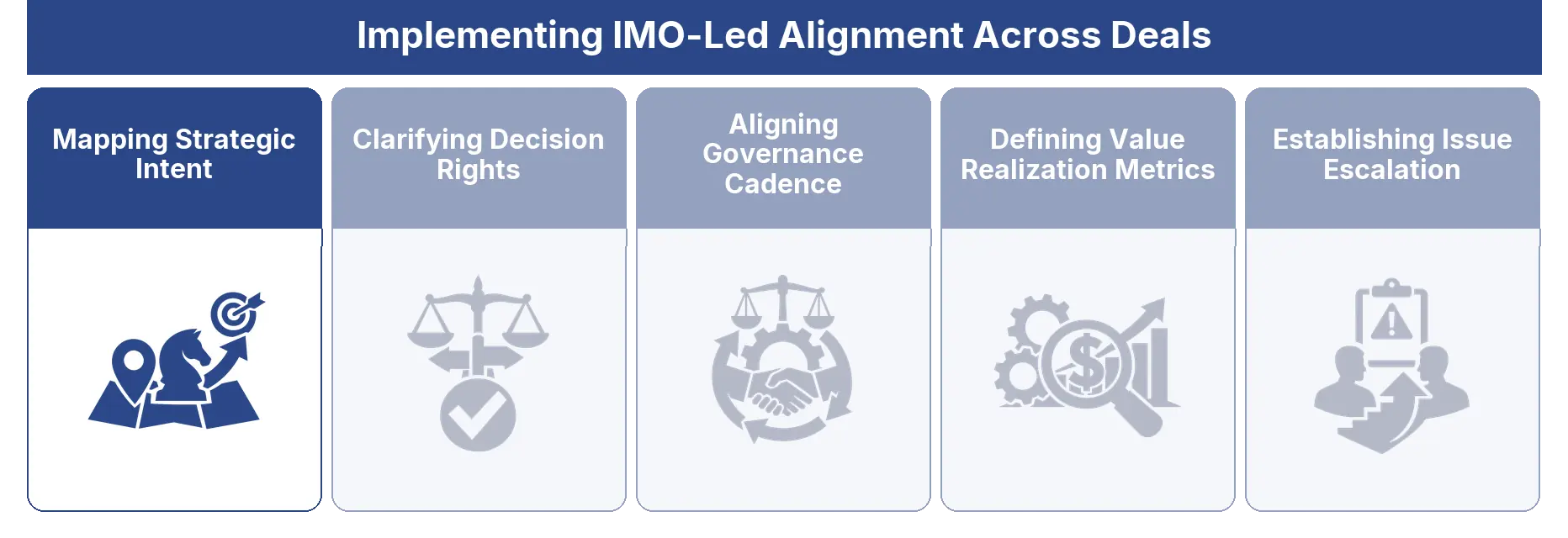
Codifying end-to-end governance begins with translating strategic intent into a concrete operating model. The IMO sets the target architecture, defines auditable functional requirements, and sequences the transition across departments to protect customer continuity while capturing synergies. In practice, a public, high-profile merger illustrates the value of maintaining operational alignment while preserving the acquired unit’s distinctive capabilities: the Intel-Mobileye deal demonstrated how a distinct franchise can be preserved by allowing a high degree of operational autonomy within a broader strategic framework. This approach is reinforced by evidence that early, explicit pre-day activity improves outcomes; EY’s nine-step framework emphasizes Day One readiness and early alignment as critical inputs to program success. Nine steps to setting up an M&A integration program The discipline also resonates with industry analysis’ prior work on integration blueprinting, which argues that mapping the future state curates a common vocabulary for all functions and speeds decision cadence. Mastering Post-Merger Integration
Clarifying Decision Rights
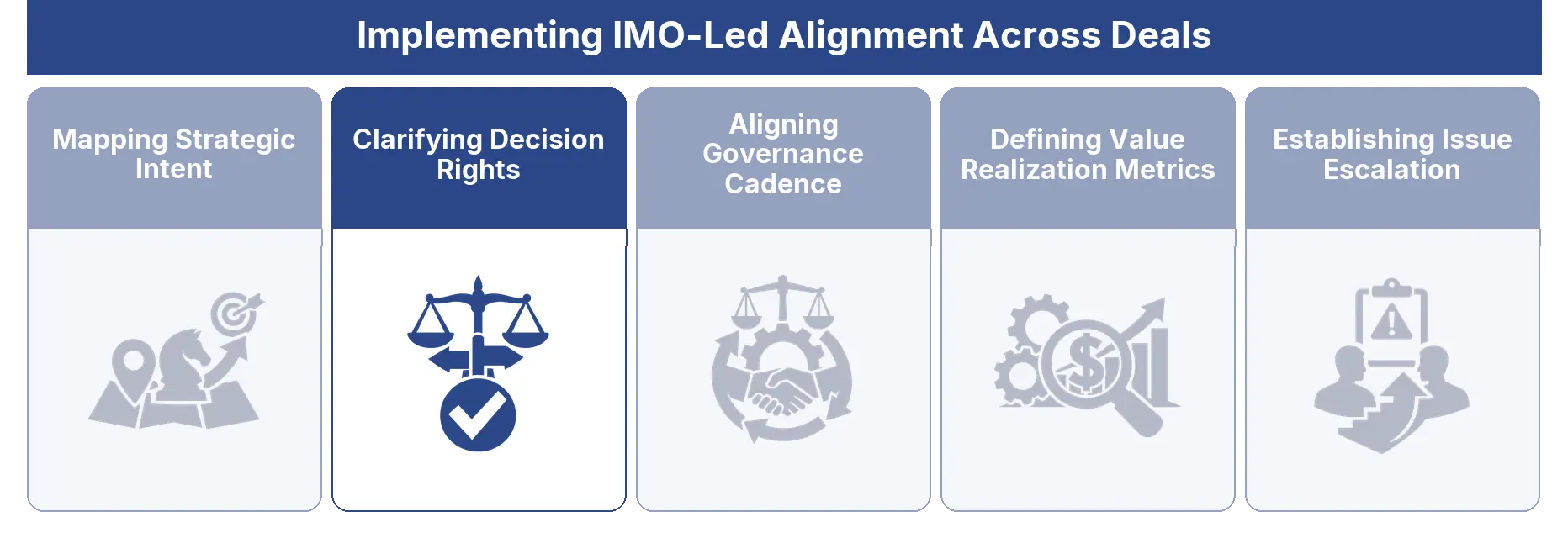
Decision rights must be codified to prevent drift across deal execution. Clear charters define scope, authority, and escalation paths, with SteerCo and functional leads empowered to approve actions within predefined thresholds. When governance is explicit, organizations avoid bottlenecks and enable rapid, cross-functional decisions. The risk of ambiguity is stark: Bain notes that strong change management and a formal integration office dramatically improve the odds of realizing expected value, while the risk of underperforming deals rises sharply when governance is reactive rather than structured. This is why Disney’s Pixar acquisition is frequently cited as a case study in maintaining cultural and operational autonomy within a broader strategic alignment. Change Management in Merger Integration Disney’s acquisition of Pixar industry analysis’ work on governance charters and alignment across GTM, product and services surfaces similar conclusions about the speed and clarity gained through charter-driven alignment. Mastering Post-Merger Integration
Aligning Governance Cadence
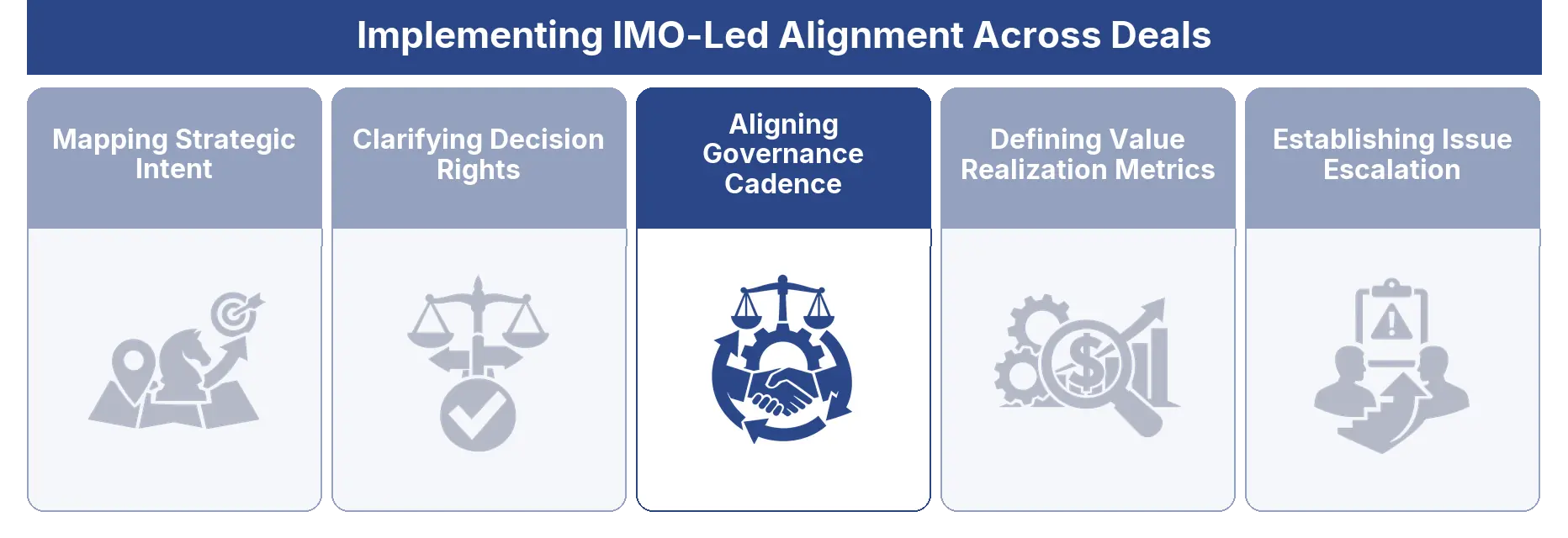
A synchronized cadence across the deal continuum turns strategy into action. Formal cadence rituals, SteerCo reviews, cross-functional cadences, and escalation gates, prevent drift and accelerate issue resolution. The cadence must accommodate both ongoing operations and integration work streams, ensuring that decisions move through a predictable rhythm rather than ad hoc handoffs. Public evidence supports the power of disciplined cadence: early integration planning correlates with higher program effectiveness, and cross-functional governance improves the probability of achieving promised outcomes. Prosci highlights change-management workshops and transparent communication as levers to sustain momentum through the integration journey. Ma Change Management in M&A Salesforce-Slack and other large platform integrations further demonstrate the value of established governance rituals in cross-functional contexts. Salesforce’s acquisition of Slack In industry analysis’ framework, cadence is anchored by a governance charter and an operating rhythm that maintains alignment with the deal thesis. Imperative of the IMO
Defining Value Realization Metrics
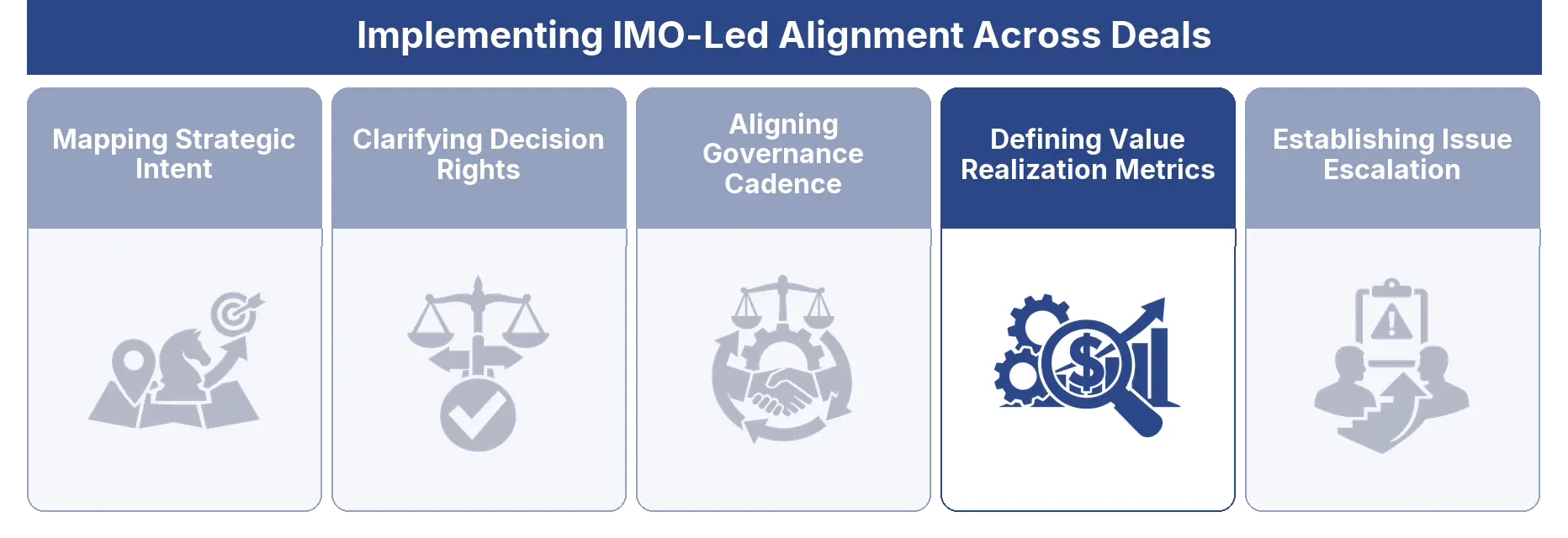
A standardized metric set across GTM, Product/Engineering, and Corporate Services anchors behavior and accelerates synergy realization. The measurement framework should include both leading indicators (Day One readiness metrics, transition-plan adherence, customer continuity) and lagging indicators (synergy realized, revenue acceleration, cost-to-value leverage). Tech-enabled integration programs increasingly report strong performance when cross-functional metrics are codified. For example, technology integration effectiveness has been cited at high levels in post-merger contexts, underscoring the importance of standardized tech KPIs in governance. Post-Merger Integration Essentials: Checklists & Best Practices Prosci emphasizes aligning change-management outcomes with these metrics to ensure workforce adoption supports the broader value thesis. Change Management in Merger Integration Public deals illustrate the value of measurement discipline at scale: Salesforce-Tableau, Cisco-Splunk, and similar cases show how analytics and reporting guardrails drive sustained value realization. Salesforce’s acquisition of Tableau Cisco’s acquisition of Splunk
Establishing Issue Escalation
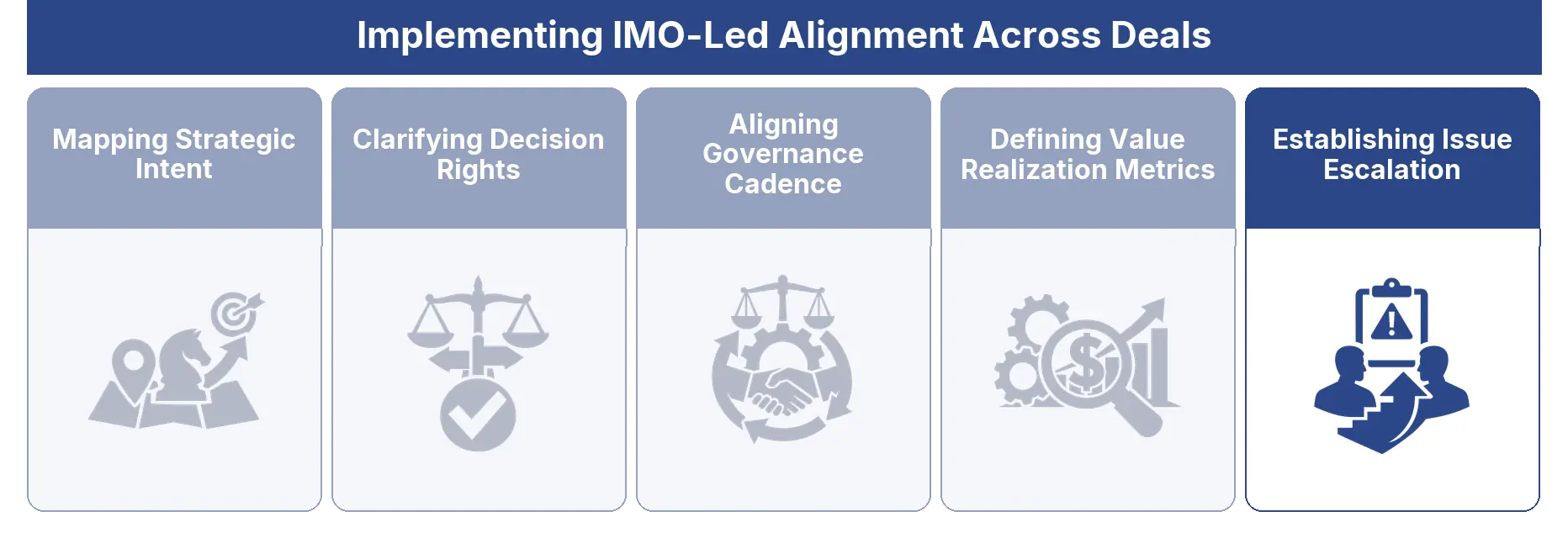
Escalation mechanics matter because cross-functional frictions threaten value realization if left unaddressed. A robust escalation model combines formal gates with transparent, rapid communication to surface and resolve issues before they derail the program. Change-management research highlights that disciplined escalation and stakeholder engagement substantially reduce resistance and time to value. Prosci’s strategy emphasizes structured workshops, clear accountability, and timely updates as core enablers of escalation effectiveness. Ma Change Management in M&A The practical impact emerges in large platform deals where governance channels are used to surface technical and market risks early, enabling course corrections without sacrificing Day One deliverables. Salesforce’s acquisition of Slack
Synthesizing Across Strategy, Acquisition, and Integration
Aligning post close action to corporate strategy pays off only when the cadence from strategy to deal criteria is explicit and executable. The piece identifies cross functional tensions as three drift sources: Day One readiness gaps, ownership ambiguity, and cadence lags, and demonstrates how an IMO Led Alignment Across Deals codifies governance across the deal continuum. Day One readiness becomes the baseline for ongoing value delivery, cadence is institutionalized, and value metrics across GTM, Product and Engineering, and Corporate Services are standardized, enabling sharper synergy capture; see the [the blueprint for ma success] for governance patterns, the [integration discipline blueprint] for operational discipline, and the [analysis of total cost of acquisition] for the financial discipline that underpins sustainable value creation.
On Monday morning, the disciplined practitioner activates Day One readiness as the operating baseline, enforcing auditable functional requirements and a synchronized transition plan across departments. Governance is codified through an IMO led cadence with clear escalation paths and quarterly inspection of milestones; the cross functional cadence becomes the default mechanism for escalation and decision making [the integration discipline blueprint]. Value metrics and reporting become a shared language across GTM, Product and Engineering, and Corporate Services, enabling rapid course correction and sustained ROI. With the framework in place, strategic intent translates into disciplined execution and measurable value that can be tracked in real time.

Get new articles by email
Insights on M&A, revenue growth, and business transformation, delivered occasionally.