
Declaring Value Without Declaring Victory: Measuring Outcomes and Informing the Next Acquisition
In 2025, ServiceNow completed its acquisition of Moveworks for about $2.85 billion. The deal was framed to extend agentic AI to front line employee experiences while keeping Moveworks close to its customers and product roadmap. That structure reduced disruption to the Moveworks go to market and customer relationships, but also introduced governance questions that tested how value would be measured after close. In the first year, integration milestones and synergy targets demanded auditable attribution as product and sales teams aligned across systems. The episode underscores a core premise: formalized value realization must be embedded in post signing governance to translate deal intent into ongoing outcomes.
The frictions were not merely cultural; they reflected a governance and measurement design that failed to bind multiple workstreams. Attribution proved difficult as milestones drifted and cross functional teams moved at different speeds, challenging the credibility of a single verdict, earlier work on integration discipline. Data quality and governance gaps undermined confidence when progress was framed without an auditable cadence, the total cost of acquisition analysis. How can we assess whether the deal delivered intended value and communicate outcomes to the board?
A Value Declaration Framework places credible, multi dimensional metrics at the heart of post signing governance, a spirit echoed in earlier work on integration discipline. Day One readiness becomes the baseline for ongoing value realization and auditable cross functional reporting. A disciplined governance cadence connects data to narrative, guiding planning, execution, and the next strategic move. This framing primes a four part body that translates Day One into auditable outcomes and reinforced governance.
Establishing a Value Delivery Baseline Post Signing
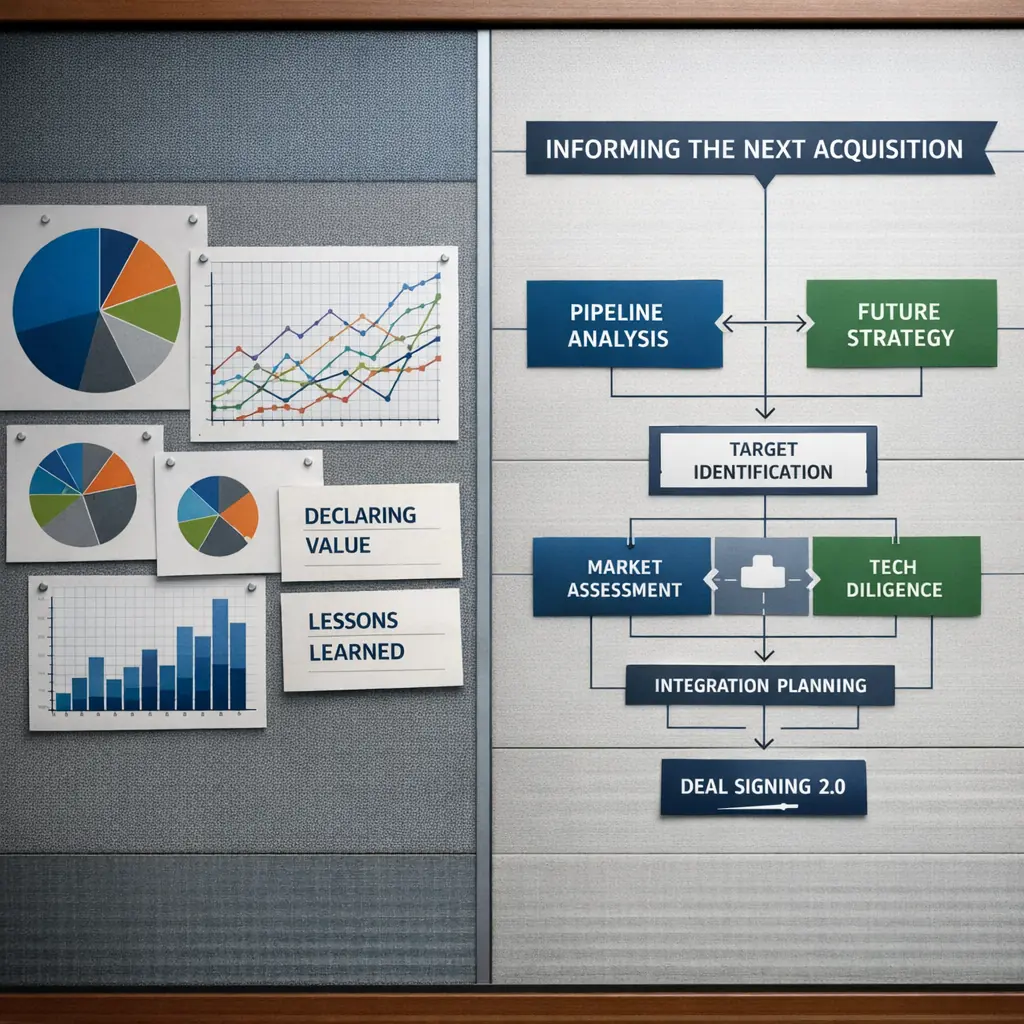
Establishing a value delivery baseline after signing anchors Day One readiness and the governance DNA for ongoing value tracking. That baseline defines the target operating model, data requirements, and decision rights that shape the post close period. An integrated governance construct, the Integration Management Office (IMO), maps responsibilities across finance, product, technology, and operations and creates an auditable data trail from Day One onward. Moveworks deal illustrates customer proximity as ServiceNow’s 2025 acquisition kept Moveworks close to its customers to protect product momentum and talent, preserving strategic rhythm while enabling cross company value capture.
From that starting point, the post close program translates strategy into measurable progress across four value dimensions. Financial performance requires a rolling view of revenue trajectory, EBITDA, and cash flow against integration spend, with a consolidated forecast and quarterly actuals reconciliation. Product and technology enablement monitors migration speed, system interoperability, and the preservation of core capabilities customers rely on. Customer outcomes center on retention, adoption, and time to value for critical use cases, while operational resilience tracks continuity, risk controls, and supply chain robustness. Governance must require auditable data, even when post signing activity accelerates. The framework for value measurement emphasizes aligning metrics with business objectives and establishing clear feedback loops value realization through metrics and definitions of value criteria. The discipline is reinforced by the idea that a rigorous understanding of how deal structure interacts with value delivery matters valuation inputs and deal structure and by referencing established pathways toward disciplined value capture the blueprint for MA success and comprehensive TCOA analysis in M&A.
Setting the cadence matters. Boards should receive regular dashboards tied to the IMO program, with data integrity and traceability as non negotiable standards. The emphasis on measuring outcomes over outputs informs how finance, product, and operations leaders translate near term milestones into longer term value, aligning with value governance and post deal discipline. A well governed baseline also resonates with practitioner guidance on packaging and execution, including the deal desk’s role in balancing speed with price integrity and scaling revenue growth. The real test is maintaining data integrity while scaling cadence, and the board’s quarterly reviews should anchor next steps and required investments, with the IMO driving a transparent, auditable chain from Day One to the next acquisition playbook. The baseline becomes a dynamic compass, guiding ongoing value realization across the four dimensions.
Addressing Measurement Ambiguity and Board Communication Gaps
Measurement ambiguity across timelines often drives premature victory declarations when early wins are loud but long tail gains remain uncertain. For value realization, Day One actions must be distinguished from benefits that unfold over 12 to 36 months. An anonymized $2.6 billion deal illustrates this: initial improvements can overstate the delta if attribution stops short of linking actions to durable outcomes. A real world parallel is ServiceNow’s Moveworks acquisition, where Moveworks was kept close to customers to protect product momentum, underscoring how governance and scope shape value durability. The framework must specify timing, data lineage, and the implied path to the next acquisition, not a single snapshot. protect product momentum
Data gaps during integration arise from misaligned data sources, inconsistent definitions, and unclear ownership. The Integration Management Office (IMO) should serve as the canonical data steward, harmonizing definitions, timing, and data ownership across IT, operations, and commercial functions so signals are comparable and auditable. Public analyses stress structured frameworks drive outcomes rather than post hoc explanations. The GAO framework emphasizes formal processes that support results over justification. Standardizing metrics reduces misinterpretation, while NIST metrology guidance highlights how quantity ambiguity derails clear communication. These commitments lay groundwork for translating Day One actions into durable value and growth. Earlier analyses of blueprint for MA success highlighted the discipline required for consistent integration execution. For the financial anchor, see comprehensive TCoA analysis.
Board ready storytelling translates metrics into a narrative that links Day One actions to realized value and to the next acquisition. MIT Sloan Management Review notes that valuations require credible cash flow assumptions and risk adjustments, strengthening governance over value claims. Deloitte’s valuation techniques offer methods and signaling choices that should be disclosed openly to preserve board trust. A disciplined narrative rests on a single source of truth with clear data lineage from IMO dashboards to board slides, and should chart the path forward for the organization’s next transaction.
Operational implications arise from anchoring measurement in a repeatable loop and a tightly governed IMO. The monitoring measurement improvement loop keeps efforts aligned with strategic KPIs and enables real time trade offs, turning dashboards into decision accelerators. The five part Value Declaration discipline can be enacted through concrete practices: establishing value metrics, validating data integrity and attribution, communicating outcomes to the board, capturing lessons from feedback, and preparing the next acquisition playbook. These steps reflect ongoing emphasis on monitoring as a governance mechanism, the necessity of comprehensive TCoA analysis, and caution in megadeal divestitures. The result is a board ready, data driven narrative with credible attribution across timelines, a resilient IMO governance model, and a clear path to the next value creating move.
Operationalizing the Value Declaration Framework
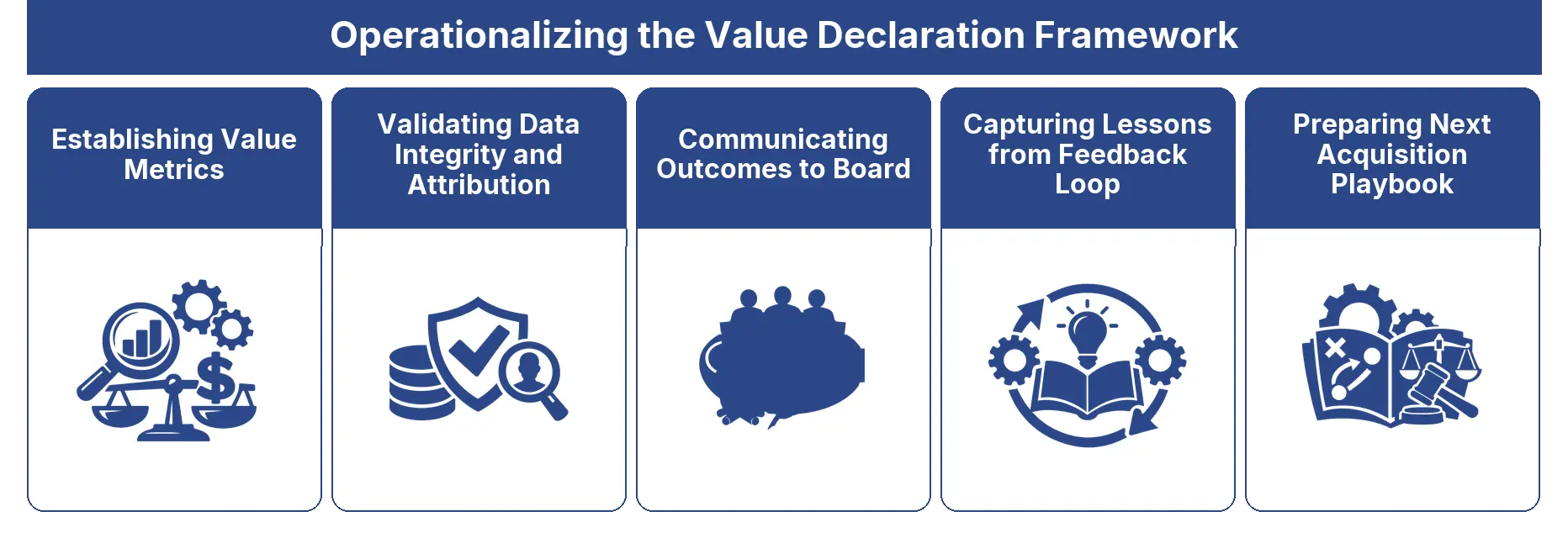
Operationalizing the Value Declaration Framework translates a value thesis into auditable metrics, disciplined governance, and a living playbook. The approach rests on five practices that bind credible measurement, robust data governance, board storytelling, continuous learning, and a refreshed acquisition playbook under the Integration Management Office (IMO). This section weaves in real world deal patterns to show how value is defined, measured, and evolving over time.
Establishing Value Metrics
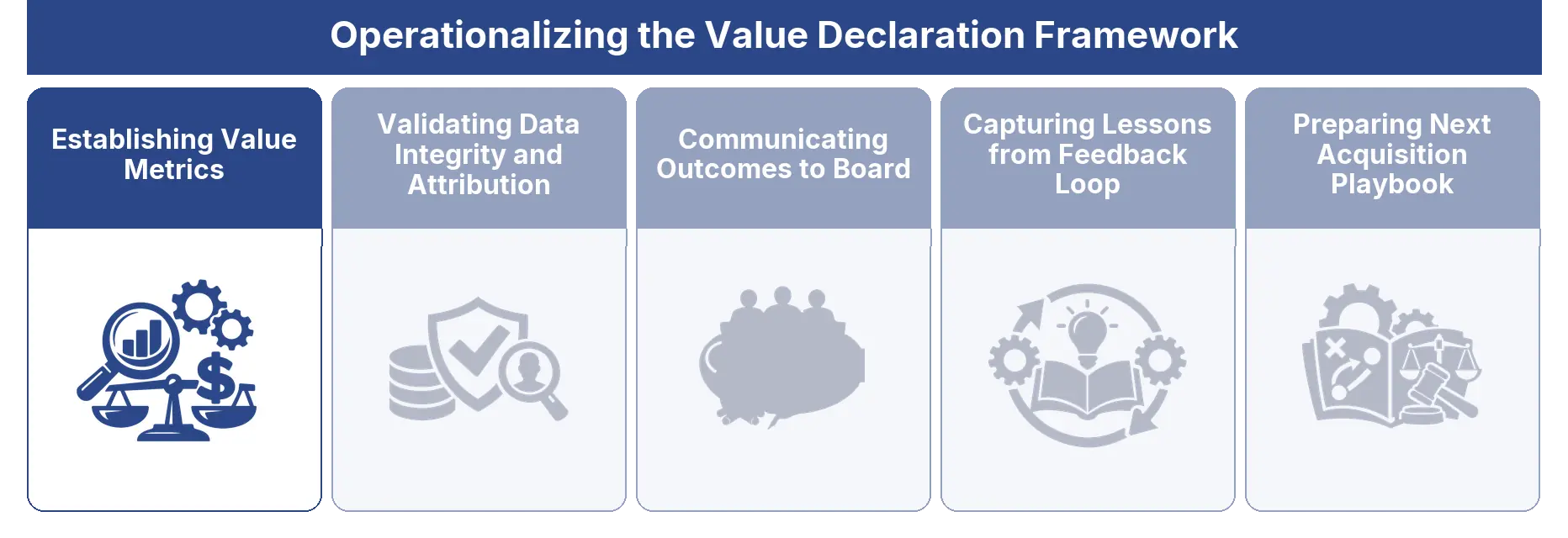
Value metrics must be credible, multi dimensional, and tethered to strategic objectives. An audit maps value streams and identifies leading indicators such as annual recurring revenue growth, net retention, cross sell lift, and time to value milestones for integrated products. Attribution rules must clearly separate outcomes driven by the deal from broader market or internal initiatives. The Cisco Splunk deal, valued at about $28 billion, illustrates the scale at which value metrics must operate and the need to quantify security and observability synergies alongside revenue expansion. For guidance, see how frameworks translate an intended value thesis into measurable outcomes, as discussed in the Value Realization Framework from inMorphis and in the broader conversation on value frameworks. Executives should also draw on the discipline of value optimization framework and the complementary lens of ecosystems and partnerships in power of partnerships for designing pricing, packaging, and deal economics that reinforce the forecast. The deal level data must ultimately support a board ready thesis with quantified scenarios and a trackable value path anchored to strategic objectives, not just headline price.
Validating Data Integrity and Attribution
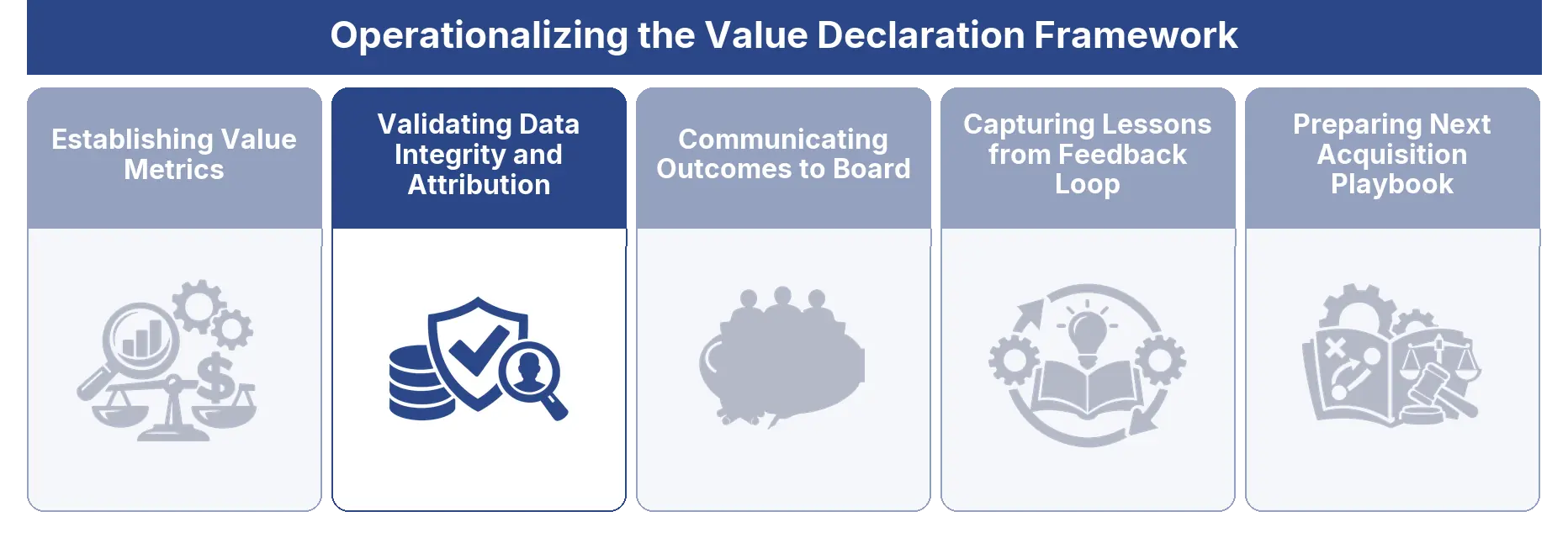
Data integrity is the backbone of credible value realization. A formal data governance approach establishes a single source of truth for all post deal metrics, with clear lineage showing which outcomes arise from the acquired entity versus ongoing corporate activities. This requires standardized data charters, disciplined attribution rules, and cross functional ownership within the IMO. External guidance reinforces the point that outcomes should be identified and measured in ways that connect decisions to people and environment, not merely financial outputs; the VALUABLES framework emphasizes careful identification of effects across dimensions, while earlier work on value frameworks highlights the need for credible evidence to inform governance decisions. The governance discipline is reinforced by credible measurement of non financial value, broadening the perspective beyond short term earnings to long term strategic impact.
Communicating Outcomes to Board
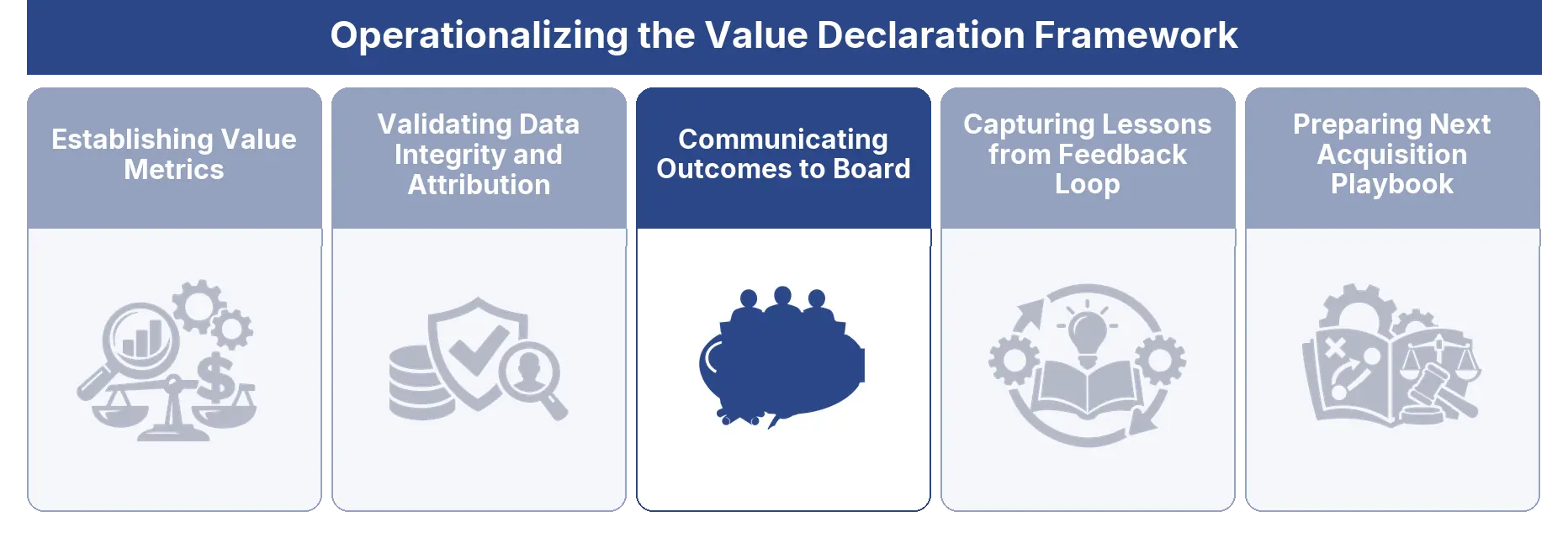
Communicating outcomes to the board hinges on storytelling that connects strategy to measurable results. A board narrative should frame the value thesis, present the forecast trajectory, show credible attribution, and highlight risk adjusted upside. External frameworks stress the importance of linking outcomes to health care or policy value in a rigorous, evidence driven way; in business M&A terms the emphasis is on translating integration milestones into tangible value for customers and shareholders. Public deal histories provide concrete anchoring points for the board story. For instance, Salesforce’s acquisition of Slack is often cited for its intent to anchor collaboration across Customer 360 and to operationalize analytics via Tableau, with the deal size widely reported at about $27.7 billion. The board deck should also reference established internal frameworks that sharpen the narrative, such as the value optimization framework and the ecosystem perspective captured in power of partnerships.
Capturing Lessons from Feedback Loop
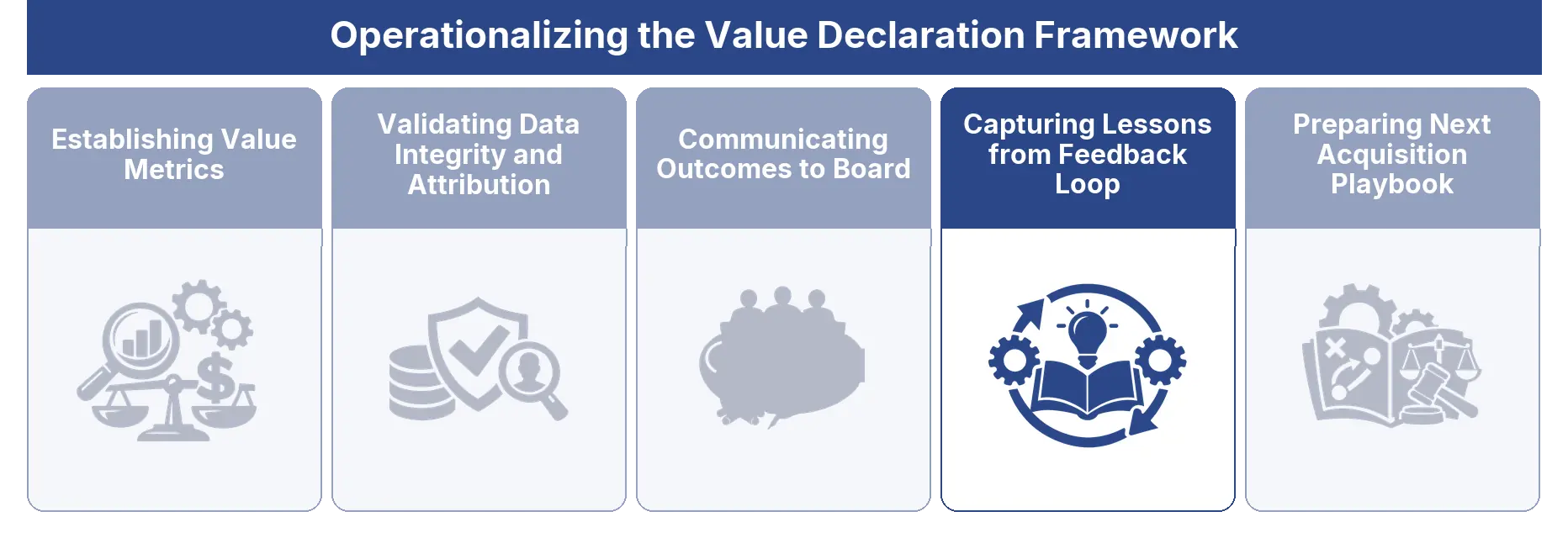
A closed loop feedback mechanism converts board learnings and operating results into improved practice. The IMO should institutionalize a quarterly review that inventories realized vs projected value, surfaces root causes for gaps, and updates the measurement model accordingly. This loop is essential to keep value discipline intact as organizations scale integrations across multiple functions and geographies. The Five Step GTM Transformation Framework emphasizes leadership alignment, customer analysis, and iterative refinement as core for sustaining disciplined execution, while continuous improvement disciplines around PMI guides reinforce the necessity of dedicated teams and tools to sustain momentum. The result is a feed forward that sharpens the value thesis for the next cycle of acquisitions and integrations.
Preparing the Next Acquisition Playbook
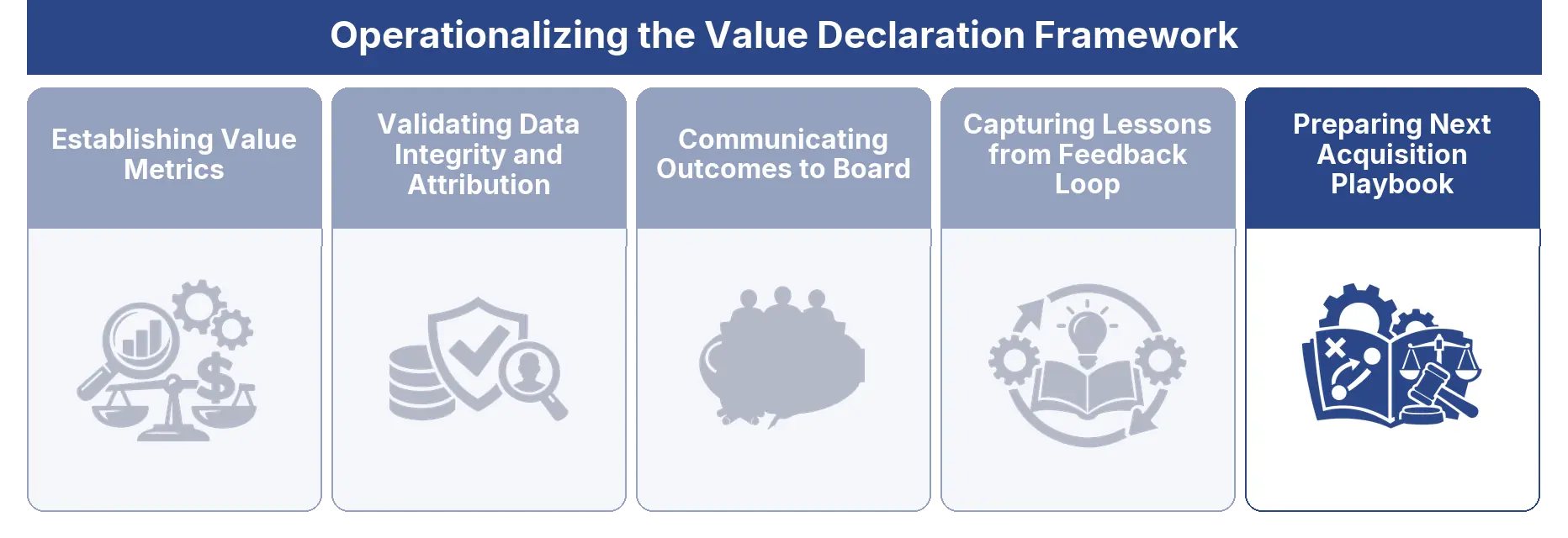
The final practice translates accumulated learning into a refreshed IMO governance and a next round playbook. The playbook should codify updated charters, decision rights, and accountability points aligned to the evolving value narrative. It should specify Day One readiness criteria, governance cadences, and a template for tracking synergy realization across the lifecycle of the next deal. Real world patterns from megadeals demonstrate the payoff of codified governance and disciplined value tracking; for example the Dell EMC and Cisco Splunk integrations underscore the need to predefine synergy capture paths and maintain operational autonomy where appropriate to preserve critical cultures and capabilities. The next playbook must articulate how the integration function coordinates with business units, IT, and GTM to deliver measurable value within the IMO framework, while embedding a learn and adapt cycle for continuous improvement. A robust playbook ties the value declaration to execution reality, ensuring governance evolves in concert with a changing deal landscape.
Consolidating Learnings for the Next Acquisition Roadmap
Declaring value without declaring victory hinges on grounding the deal thesis in a Day One baseline and a governance DNA that sustains value realisation. The central arc shows that early, loud wins can mask long tail gains unless measurement remains disciplined across horizons. The Value Declaration Framework converts a thesis into auditable metrics, a governance cadence, and a living playbook that evolves with execution. Earlier analysis on integration discipline blueprint frames this approach, and the case for Total Cost of Acquisition analysis reinforces the need to track costs alongside value. Distinguishing declaration of value from declaration of victory is the essential discipline for sustainable progress.
Looking ahead, disciplined value tracking becomes the operating law of any deal thesis rather than a one-off postscript. It demands that governance rituals, owners, and metrics are defined before the close and sustained through execution. Executives should establish Day One ownership before signing, codify the escalation path, and stand up the governance rhythm in week one. They should deploy auditable performance metrics across the Value Declaration Framework, orchestrate regular cross-functional reviews, and embed the living playbook into the Integration Management Office (IMO)’s cadence. When these actions are in place, value realization becomes a measurable discipline, not a loud moment that fades.

Get new articles by email
Insights on M&A, revenue growth, and business transformation, delivered occasionally.