Stand Up an IMO Early: Designing a Minimal Viable Integration Management Office for a First Deal
In 2024, Synopsys announced its roughly $35 billion acquisition of Ansys, combining chip design automation with engineering simulation. The move paired a silicon design leader with a simulation platform, demanding careful coordination so each product line kept its momentum through the transition. Public disclosures framed the integration as a silicon to systems platform play, requiring cross functional coordination across product, sales, and engineering. Executives faced overlapping roadmaps and regulatory review, exposing governance gaps that a first time integrator would feel acutely. The Synopsys Ansys case illustrates a core tension in software and engineering M&A: pursuing scale and synergy without compromising Day One readiness.
Governance designs often appear lean on paper but prove heavy in practice as signing nears. Dependencies around data access, security controls, and IT integration push against aggressive timelines. Without clear decision rights and a lightweight cadence, Day One readiness becomes the casualty of ad hoc coordination. How can a thorough understanding of integration costs enhance the valuation and success of an acquisition?
A minimal Integration Management Office becomes the operational hub for pre close action and Day One readiness. A bounded charter, a simple cadence, and a compact set of artifacts translate intent into action without slowing momentum. Prior work on integration discipline shows that disciplined planning and standardization deliver speed to value in complex SaaS platforms. That disciplined, scalable pattern aligns with the analysis of total cost of acquisition insights.

Launching a Minimal IMO for First Deal Day One
Launching a minimal Integration Management Office for a first major deal creates a practical spine that prevents post close chaos. The aim is a lightweight governance layer that guides pre close work and Day One readiness without slowing momentum. Integration Management Office is key to value delivery and the broader literature emphasizes early IMO empowerment over ceremonial oversight. The approach treats the IMO as a lean, decision focused engine rather than a box to check. Capturing deal value is the aim and the design should prioritize speed and clarity over formality.
To be effective, a minimal IMO should deliver tangible artifacts from Day One onward. The Day One plan and a risk register become anchor artifacts that translate intent into action. The Day One plan defines the operating vision for the initial 100 days, while the risk register catalogs exposure points and mitigations. These artifacts enable cross functional owners to co own milestones and demonstrate visible progress to stakeholders. This pattern aligns with industry analysis emphasis on Day One readiness, including a Day One readiness approach and the IMO imperative.
Cadence and clear ownership are essential to prevent drift after close. A minimal IMO should establish a tight cadence that combines weekly check ins with milestone reviews and escalation thresholds. Early, explicit commitments from cross functional owners around a shared Day One objective anchor progress and turn it into measurable results. A roughly $35B deal demonstrates the cost of neglecting Day One readiness roughly $35B deal. In practice, governance models that preserve an operating tempo while aligning on critical priorities deliver a faster path to value. External guidance corroborates the value of an anchored decision log and a structured cadence 60 days before close and the reality that much PMI work happens early early PMI work.
Cross functional alignment around a single Day One objective is essential to sustain momentum after close. The minimal IMO should specify a shared Day One objective, a compact set of near term milestones, and a governance cadence that keeps decisions within reach of the deal sponsor and functional leads. In practice, that means a lean charter, clearly owned SLAs, and a weekly pulse on readiness and risk. The pattern is visible in public deals that preserved culture while pursuing aggressive integration targets, such as IBM Red Hat, where Red Hat operated independently to protect its open source community, and others. The discipline blueprint documented in prior industry analysis work shows how disciplined planning translates to speed to value; the minimal IMO becomes the first practical test of that blueprint. integration discipline blueprint
Balancing Speed, Risk, and Alignment in Early Deal Governance
Speed in high velocity M&A often collides with cross functional alignment when governance lacks a spine. Without a formal governance backbone, functional leads drift on independent rhythms, risking misaligned priorities across information technology, cybersecurity, data, human resources, and operations. An Integration Management Office (IMO) provides the spine, establishing a central cadence from Day 1 that binds workstreams to a shared objective and ensures timely decisions, risk tracking, and realization of synergies. In practice, disciplined governance accelerates value capture, while unstructured approaches yield only partial progress. This discipline aligns with integration discipline blueprint, anchoring Day One readiness in a common spine; as a contrast, Microsoft’s acquisition of LinkedIn illustrates how speed without governance can erode strategic intent.
Overengineering governance can stall momentum by turning actionable decisions into process artifacts. Day One readiness spans IT, security, data, HR, and operations, demanding disciplined coordination rather than a sprawling bureaucratic machine. A lean model suits smaller deals: an integration lead paired with a project lead, and roughly three to six months of active integration work, with a steering cadence that scales with deal size. Change Managed’s cadence guidance for smaller deals emphasizes the practical rhythm, while MasScience notes that a practical IMO often begins with a weekly diligence focused cadence pre close; the cadence itself matters for capturing critical dependencies. This approach aligns with megadeal governance patterns described in Navigating megadeal divestitures.
Day One readiness across IT, security, data, HR, and operations requires disciplined coordination. The IBM Red Hat integration illustrates this balance: IBM acquired Red Hat for about $34 billion and allowed Red Hat to operate largely autonomously to protect its open source community, preserving value while enabling scale. The Synopsys, Ansys combination demonstrates the same logic for engineering cultures, preserving distinct capabilities while pursuing synergies that sustain technical capital and value realization. Across these cases, Day One readiness demands a shared operating model that spans multiple functions and time horizons, reinforced by the integration discipline blueprint and megadeal governance patterns: integration discipline blueprint and Navigating megadeal divestitures.
Designing an Incremental IMO Framework for Day One Readiness

Designing an Incremental IMO Framework for Day One Readiness translates Day One vision into a practical, staged set of deliverables. It anchors governance in a Minimal Integration Management Office (IMO) Charter, connects function level actions to lightweight checklists, and establishes a cadence that sustains momentum through close. Real world practice shows Day One readiness as a live engine rather than a single milestone, requiring disciplined risk tracking and clear communications to preserve stakeholder trust. The following framework offers five actionable pillars, each anchored to public deals and industry guidance, to turn a Day One objective into predictable value realization.
Establishing Day One Vision and Metrics

Translating Day One vision into actionable targets begins with auditable metrics and explicit ownership. The vision should define customer continuity, product availability, data integrity, and system readiness with near term milestones and accountable owners. A practical approach binds outcomes to 2 3 measurable targets, each with a service level agreement and a concrete Day One checklist. A public illustration is the Synopsys Ansys integration, where the deal was valued at about $35 billion and each product line kept meaningful autonomy to protect engineering momentum, reinforcing the value of preserving critical capabilities on Day One. Synopsys Ansys integration. Earlier work on leading integration disciplines emphasizes mapping a future state for carved out operations by function and establishing keep the lits for continuity as a first priority. See the discipline blueprint for a deeper playbook on translating ambition into action. integration discipline blueprint
Defining Minimal IMO Charter

A Minimal IMO Charter codifies scope, decision rights, cadence, and the templates used to govern Day One. It should specify which decisions reside with the Steering Committee, how quick turn decisions are escalated, and which artifacts, risk registers, issue trackers, and comms briefs, must exist at close. Public guidance reinforces pre close clarity: establishing an IMO at least 60 days before close helps scope workstreams and staff appropriately. 60 days before close The charter also anchors governance with lightweight, repeated formats so decisions stay auditable and traceable. Early evidence from practitioner sources highlights the importance of a Day One decision log and formal governance to prevent drift. the decision log on Day 1
Mapping Day One Actions by Function

Day One actions must be mapped by function into lightweight checklists and dependency trees that reveal interdependencies and potential blockers. Functional leads, IT, finance, HR, sales, and product, should translate the Day One vision into concrete deliverables, with owners and SLAs aligned to the charter. A well structured mapping enables rapid sequencing of critical tasks, while ensuring non critical work remains staged for post close execution. The approach is reinforced by public discussions of IMO readiness as a core driver of successful transitions; the idea that a core team interfaces with the deal sponsor and expands the team as needed is a recurring theme in expert practice. The IMO setup guidance and The IMO guide underline the importance of early, department aligned ownership. In practice, large scale mergers such as the Salesforce Slack integration illustrate how a portfolio wide action map coordinates a complex set of functions to align with the Day One objective. Salesforce Slack integration A related public example is the Dell EMC integration, where portfolio breadth demanded precise cross functional coordination. Dell EMC integration governance A further internal anchor references established practice on linking Day One actions to a common framework. mastering post merger integration
Setting Cadence, Decisions, Escalations

Cadence sets the tempo for accountability. A disciplined Day One cadence includes rapid, short run check ins immediately after close, followed by a structured sequence of weekly and then monthly reviews with escalation paths for blockers. Public guidance stresses that the cadence should be anchored in decision thresholds and documented in a Day One governance log to prevent drift. The frame of reference often cited is that a fully empowered IMO before Day One is a strong predictor of success, which elevates the urgency of early setup. single biggest predictor of success It is also recommended to test and codify escalation routes and decision criteria on Day One to avoid stalled momentum. 60 days before close This practical rhythm aligns with the principle that a substantial portion of integration work occurs in the initial period; leaders should expect a meaningful portion of decisions to be taken within the first 90 days. 80 90 percent of the work in the first 90 days
Creating Risk Registers and Communications

Risk registers, issue tracking, and a clear communications plan are central to sustaining stakeholder trust through Day One and beyond. A formal risk log surfaces near term threats to continuity and compliance, while a disciplined comms plan preserves confidence across the merged organization and external stakeholders. Public practice emphasizes that establishing risk governance early supports faster remediation and consistent messaging, particularly in high velocity integrations. Public perspectives on governance underline that the IMO is a vehicle for value capture, not a destination in itself; risk and communication planning are essential to realize benefits. risk registers and comms plans
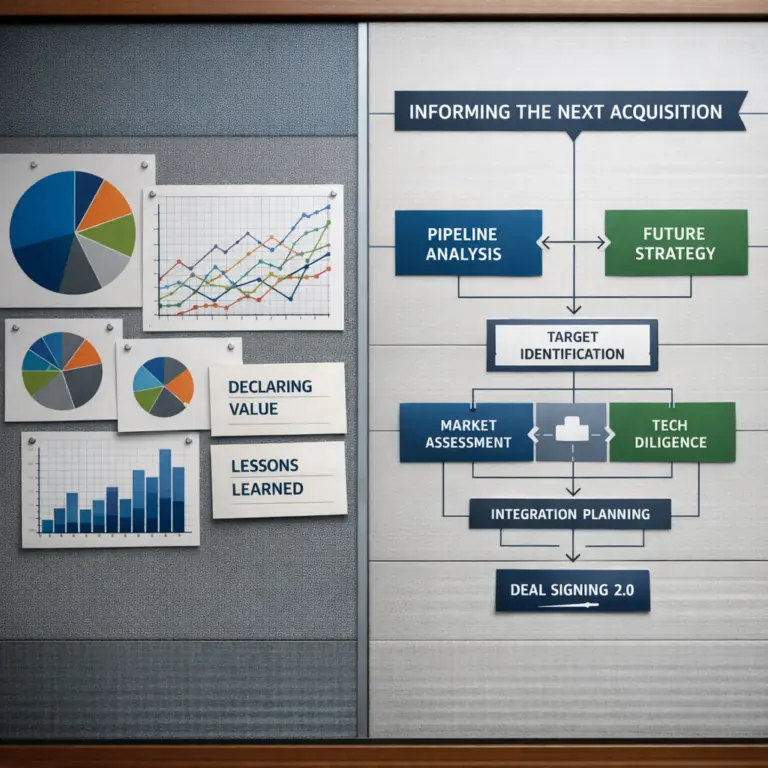
Synthesizing Early IMO Gains to Inform Future Integrations
Across high-velocity M&A, a clear governance spine often determines whether the deal thesis translates into realized value. Launching a minimal Integration Management Office creates a practical Day One spine that anchors strategy to execution and shields the organization from post-close chaos. The four-phase IMO lifecycle, spanning strategy, diligence, transaction execution, and post-close integration, transforms an ambitious thesis into a disciplined sequence of milestones, while centralized governance prevents duplication and misaligned priorities. With this approach, Day One readiness becomes a measurable outcome, not an aspirational goal. This framing builds on prior analysis of integration discipline framework.
Looking ahead, the disciplined organization will implement Day One readiness by identifying Day One owners before signing and establishing a cross-functional cadence that keeps milestones synchronized, a pattern highlighted in integration discipline framework. It will deploy the incremental IMO framework, linking diligence findings to a staged integration plan and codifying escalation paths to preserve momentum through closing, a concern underscored by total cost of acquisition analysis. With this structure, governance governs the cross-functional motion across the deal, becoming a living instrument that can scale as more acquisitions unfold and value is realized faster. The disciplined practitioner will stand up the governance rhythm in week one, orchestrate information flows across functions, and formalize the decision rights to sustain momentum into the next integration.

Get new articles by email
Insights on M&A, revenue growth, and business transformation, delivered occasionally.