
Designing an Acquisition Strategy That Delivers Corporate Objectives: Criteria, Synergies, and Readiness
In 2019, IBM acquired Red Hat for about $34 billion and kept the subsidiary operating with substantial autonomy to preserve its open-source culture. That approach aimed to accelerate IBM’s move into open-hybrid cloud environments, weaving Red Hat’s Linux and cloud-native capabilities into IBM’s existing portfolio. The commitment required balancing Red Hat’s autonomous operating model with IBM’s scale ambitions, a tension that would set the tone for the post-close journey. Executives learned that governance and incentive design, as outlined in the blueprint for MA success, could make or break the value thesis, especially when channel strategies and product roadmaps must align. A more rigorous understanding, including Total Cost of Acquisition analysis, helps illuminate hidden integration costs and informs post-close planning.
In many high-stakes technology deals, objectives exist on slide decks but fail to translate into actionable diligence criteria, synergy plans, or governance cadences. Without a disciplined bridge from strategy to term sheet, screening misses critical capabilities and overclaims on potential synergies, leaving management with execution gaps at Day One. As governance and decision rights remain under-defined and cross-functional incentives diverge, value realization becomes a test of pace rather than potential. How can corporate objectives be translated into acquisition criteria, synergies, and readiness measures to deliver value?
The underlying premise treats acquisition strategy as a direct lever for realizing corporate intent, connecting strategy to the deal thesis through explicit criteria and measurable outcomes. The framework emphasizes pre-deal clarity on what constitutes value, early synergy hypotheses, and a structured Day One readiness plan that translates intent into action post-close. Regulatory scrutiny, private equity dynamics, and talent risk heighten the need for governance cadence and disciplined decision rights across the deal continuum. The path ahead links vision to practice and invites disciplined execution across the deal continuum.

Aligning Corporate Objectives with Acquisition Strategy
Aligning corporate objectives with acquisition strategy begins with a clear articulation of growth targets, market bets, and capability gaps acquisitions should address. When strategy stops at aspiration, deal criteria, synergy hypotheses, and Day One readiness drift. A formal alignment framework translates aims into concrete criteria and a disciplined path to value delivery. Across sectors, the gap between intent and execution remains a core reason why deals underperform, underscoring the need for a structured linkage mechanism. For example, 70-90 percent of M&A deals fail to create shareholder value, a statistic frequently cited in governance discussions. The broader literature reinforces that acquisitions are most successful when corporate aims feed explicit criteria, measurable milestones, and a governance cadence that governs the deal continuum [tangible costs of M&A integration].
The market’s most scrutinized acquirers have faced the same test. In 2017, Amazon-Whole Foods set the template: Amazon acquired Whole Foods for about $13.7 billion to combine e-commerce logistics with physical grocery retail. Intel acquired Mobileye for about $15.3 billion, ran it with operational autonomy, and later took it public again. Salesforce acquired Tableau for about $15.7 billion in an all-stock deal to add self-service analytics to its platform.
Public benchmarks illustrate the governance and design choices required to realize the corporate thesis. The Intel-Mobileye (2017) deal demonstrates how a strategy can preserve operating independence where necessary; Mobileye remained operationally autonomous to protect its franchise. Similarly, Salesforce-Slack (2021) anchored a collaboration layer across Customer 360 while aligning product roadmaps to realize synergy and ensure a cohesive customer experience. These cases show that external success depends on explicit governance and readiness to adapt structures; less-visible but equally instructive are large-scale consolidations such as Dell-EMC (2016), which required an expansive IT and operating-model integration plan to harmonize a sprawling portfolio.
To operationalize the connection between aims and actions, a five-element value-driven framework serves as the connective tissue: Mapping Strategic Intent; Screening Target Profiles; Estimating Synergy Potential; Assessing Integration Readiness; Establishing Governance for Scenarios. The five elements convert corporate strategy into a disciplined acquisition program, where strategy, diligence criteria, and post-close scenarios are interlocked. Prior work underscoring integration discipline emphasizes that the cost of execution must be weighed against potential value; [tangible costs of M&A integration] anchors the budget to outcomes. The human side of integration matters too, since people and culture often determine whether promised synergies translate into real operating improvements [Navigating the Human Side]. The framework’s design recognizes that the synthesis of deal logic and day-one readiness hinges on a deliberate integration strategy, where governance and scenario planning govern decisions across the deal continuum [secret role of integration strategy].
The real test lies in translating corporate aims into actionable, measurable execution thresholds. When governance is explicit and the five elements are activated early, value delivery moves from thesis to practice. The path forward requires disciplined execution: align objectives with deal criteria, predefine calibration milestones for synergies, and establish a governance cadence that guides Day One readiness, integration execution, and ongoing value capture [tangible costs of M&A integration].
Translating Corporate Objectives into Measurable Criteria
As translated here, the approach weaves in three pillars: establishing objective criteria tied to growth ambitions, quantifying synergy hypotheses across revenue, cost, and strategic benefits, and embedding governance cadence with clear decision rights. The first pillar centers on crystallizing what success looks like in financial, customer, and capability terms and ensuring those definitions travel across planning, pricing, and product teams. The second pillar requires a disciplined math of synergy, expressing revenue uplift, cost reductions, and strategic advantages in comparable units and time horizons so go/no-go decisions rest on verifiable thresholds. The third pillar, governance cadence, fixes accountability across the IMO and SteerCo, and ensures Day One readiness remains tightly coupled to ongoing value delivery. These concepts surface repeatedly in reputable sources that emphasize criteria-led strategy and disciplined execution as the path to durable value.
Prior industry analysis work on integration governance underscores the practical importance of embedding decision rights early. See The Imperative of the IMO for governance patterns that translate strategy into accountable action, and note how governance cadence tightens discipline across the deal lifecycle. In addition, the transformation governance literature offers parallel lessons about tying measurement to execution milestones, ensuring that monitoring and adaptation stay anchored to strategic aims. See SMART KPI guidance in the transformation literature to ensure indicators cover critical areas and drive accountability. For further reading on how criteria and governance intersect with execution, see the public-sector oriented acquisition strategy guidance and the AcqNotes framework, which collectively reinforce the need for explicit, measurable outcomes.
These insights converge on a simple implication for deal teams: precision in criteria channels energy toward high‑impact opportunities and reduces cross‑functional friction during screening, due diligence, and integration. The evidence also suggests that disciplined criteria yield superior risk management, enabling a more accurate calibration of Day One plans and faster realization of planned synergies. When governance cadence is codified and decision rights are unambiguous, the organization can translate ambitions into disciplined action at scale, preserving value across the entire lifecycle of the deal. The real test is whether governance is designed to evolve with the deal, not simply to enforce initial intentions; the cadence must adapt as learnings accumulate and the integration stabilizes. The path forward is not merely to screen well, but to govern well enough to ensure that the screening triggers the right portfolio mix and the right pace of execution.
Architecting a Value-Driven Acquisition Framework
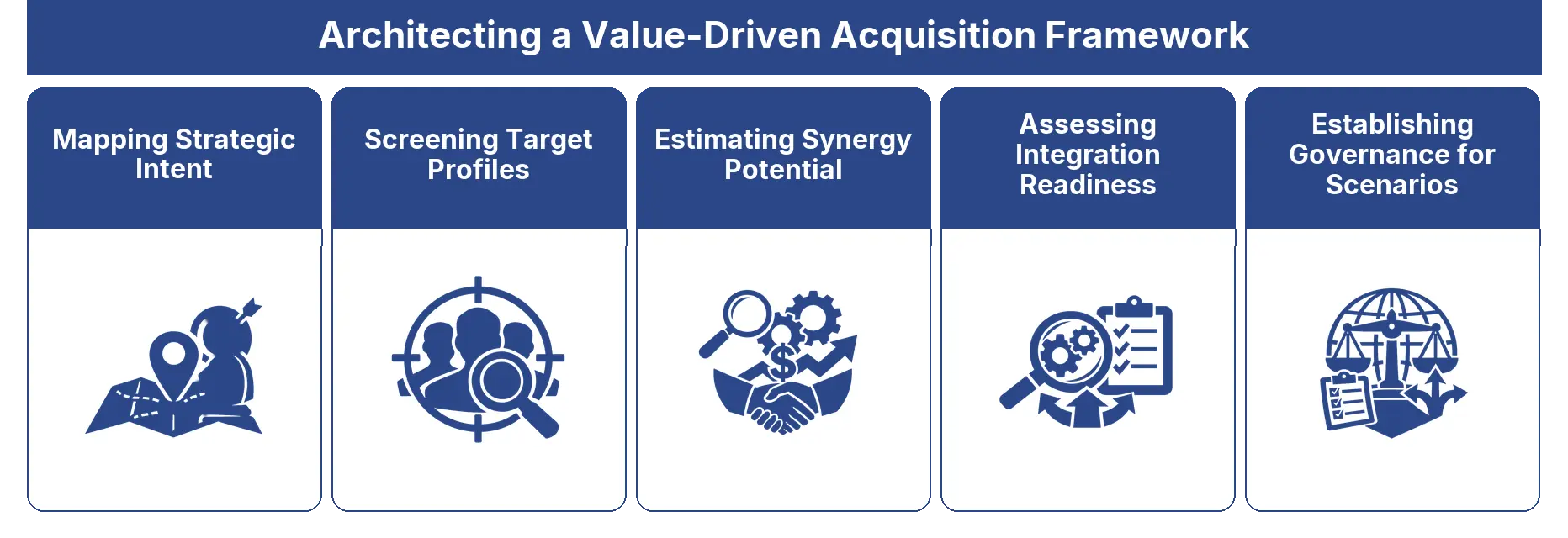
Architecting a Value-Driven Acquisition Framework translates strategic intent into disciplined action across five interdependent dimensions. The framework maps intent to measurable value, screens targets against a rigorous profile, estimates attainable synergies, assesses readiness for Day One, and establishes governance scenarios that adapt as learning accumulates. The approach blends financial discipline with cross-functional execution to preserve the investment thesis through integration. Real-world experiences show that value realization hinges on deliberate design rather than reactive fixes, and governance cadence must evolve with the deal lifecycle.
Mapping Strategic Intent
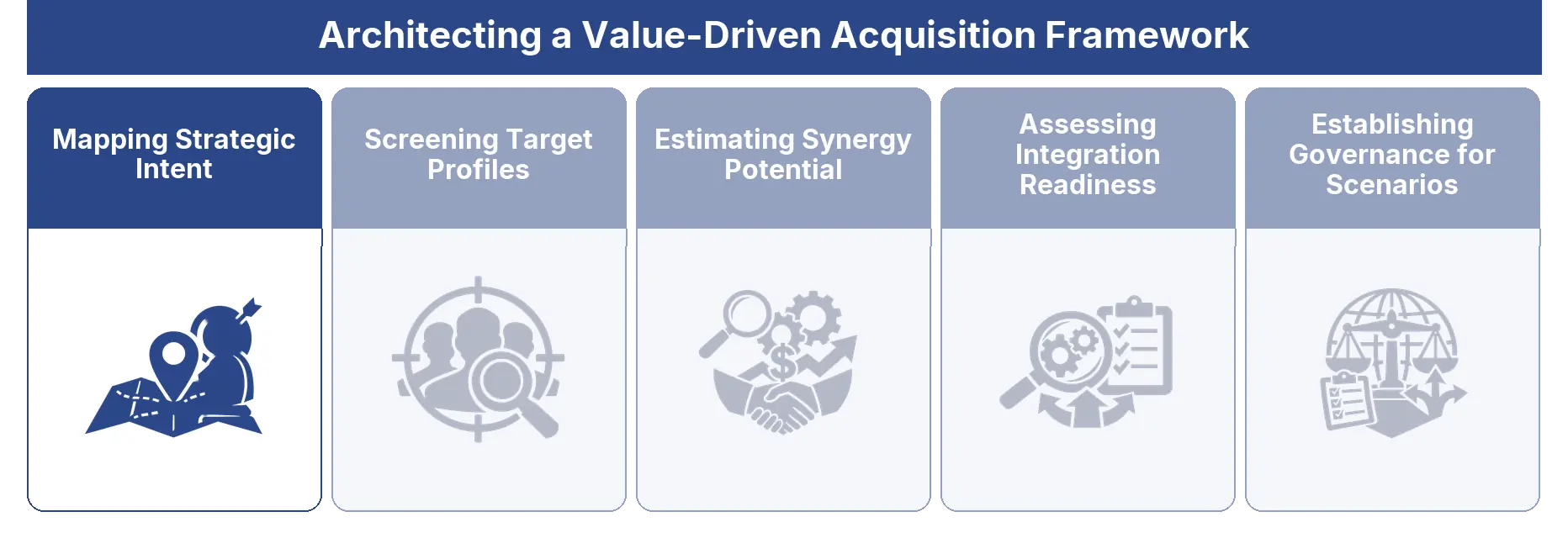
Mapping Strategic Intent anchors the deal thesis to quantified value and explicit governance boundaries. It requires translating strategic priorities into concrete value drivers that guide due diligence, target screening, packaging, and the Day One plan. History shows that intent erodes when integration is treated as an afterthought, allowing value to leak through misaligned investments and timing. The Salesforce-Tableau transaction illustrates the principle: Tableau kept its own product identity while plugging into a broader platform, enabling cross-sell and data synergy. This approach demonstrates how intent translates into disciplined value anchors and governance rails; the discipline is reinforced by referencing established analyses such as the Total Cost of Acquisition analysis for upfront budgeting and milestone setting. For practitioners seeking an established discipline, the integration discipline framework offers a cohesive way to connect deal intent to realized value.
Screening Target Profiles
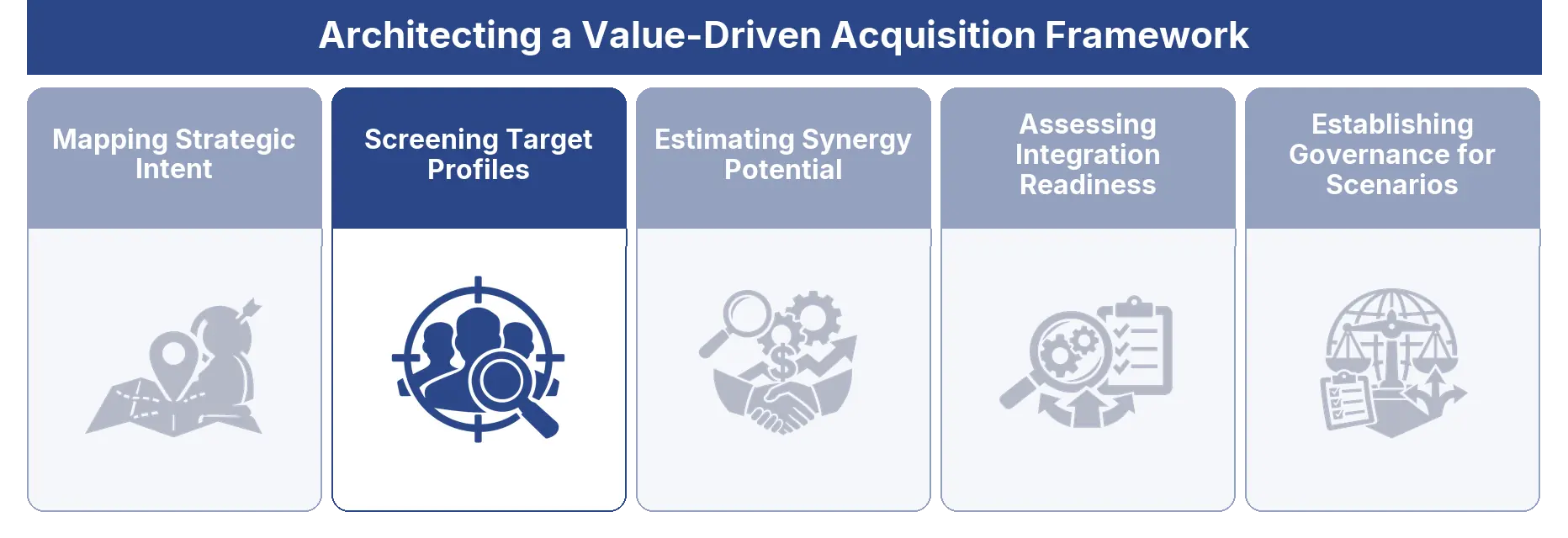
Screening Target Profiles translates intent into disciplined target selection. An ICP-driven screen blends demographic and firmographic signals with observed behaviors to guide target screening, content strategy, and resource allocation across sales and marketing. It requires cross-functional input and market research to avoid misalignment that drains value. The Disney-Pixar acquisition provides a concrete illustration: Disney pursued cultural fit and creative continuity while leveraging scale, validating the need to align target attributes with the intended platform and brand strategy. Likewise, the Dell-EMC combination shows how a broad portfolio can be screened for fit against operating-model complexity and governance requirements. For guidance on rigorous diligence and screening, practitioners can review the approach described in the article on structuring due diligence in M&A. The evidence reinforces the point that good screening reduces wasted effort and sharpens negotiation posture.
Estimating Synergy Potential
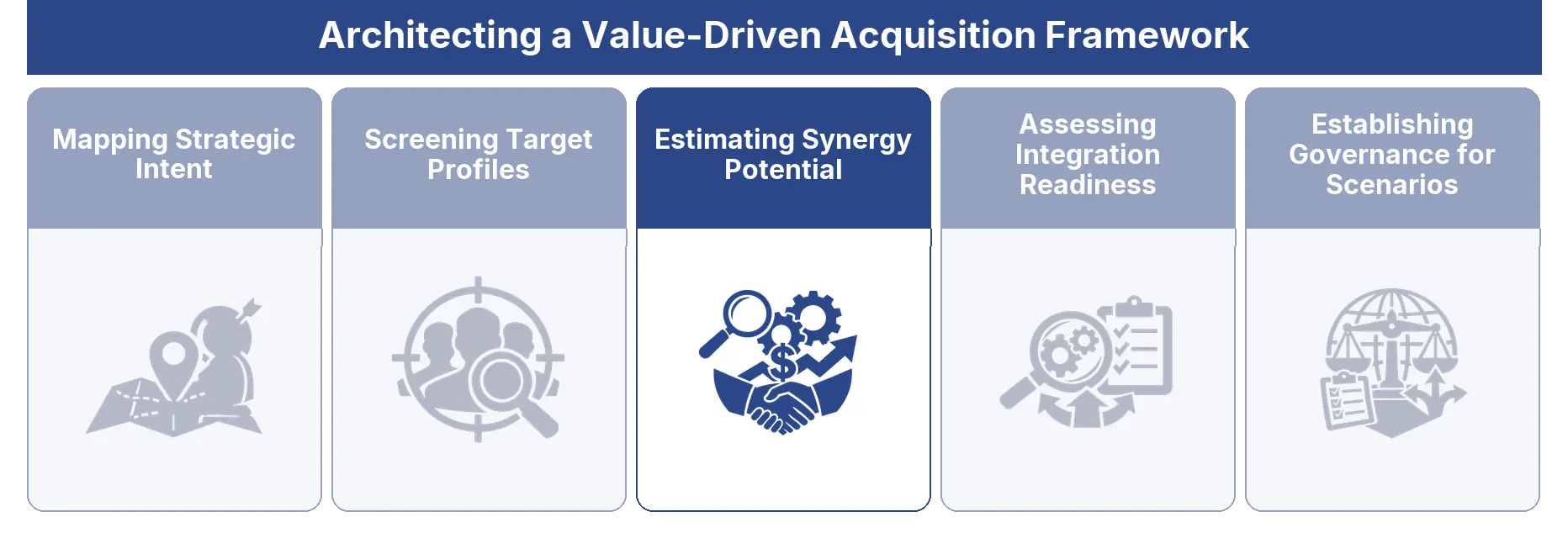
Estimating Synergy Potential decomposes value into revenue and cost synergies, requiring upfront identification to guide diligence and negotiation. The plan should pre-identify synergies so deal teams negotiate with realistic value anchors, including cross-sell opportunities, geographic expansion, and procurement savings. The literature emphasizes that misaligned expectations are a primary driver of post-close disappointment; a widely cited statistic notes that 58% of deals fail due to misaligned strategic goals, underscoring the need for explicit synergy planning. The Kraft Heinz merger illustrates the stakes of targeting aggressive cost synergies and revenue expansion opportunities, while the Synopsys-Ansys and Oracle-NetSuite examples demonstrate how integration choices affect technology portfolios and go-to-market motion. In practice, the integration discipline framework informs how synergy targets move from paper to execution.
Assessing Integration Readiness
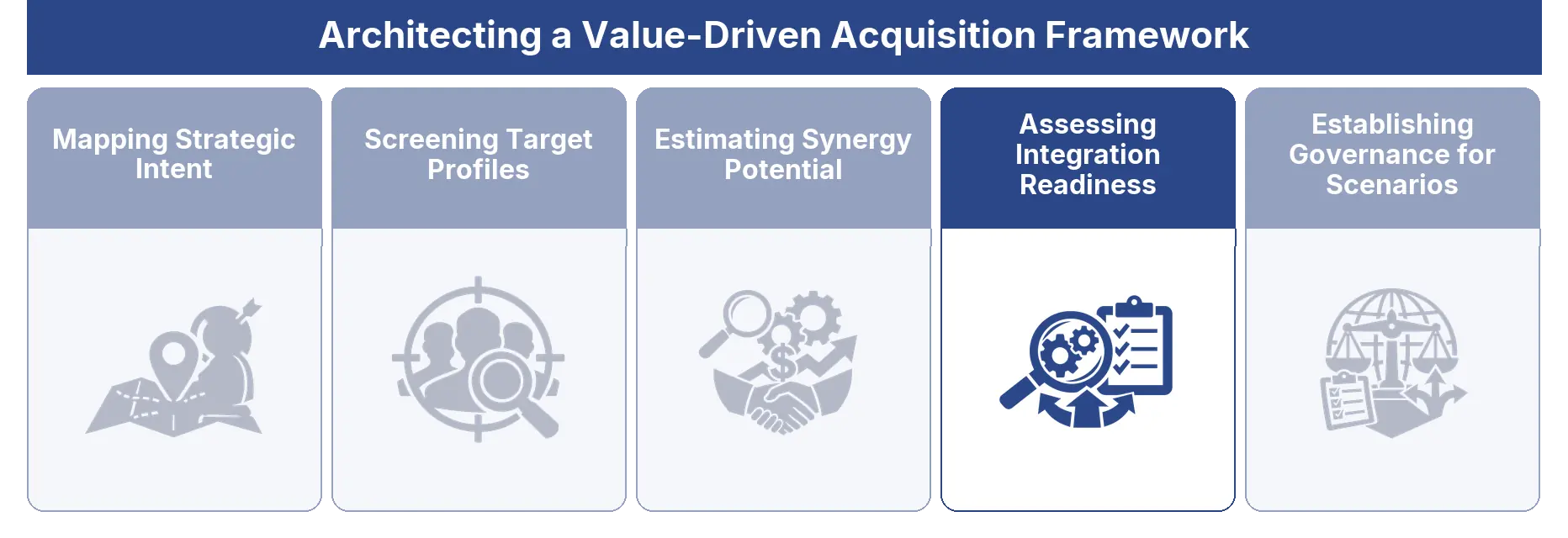
Assessing Integration Readiness evaluates operating-model alignment, governance, and Day One planning. Readiness hinges on a formal mechanism to coordinate cross-functional actions, with a clear plan for Day One launch and ongoing stabilization. The IBM-Red Hat integration provides a pertinent example of preserving cultural and technical autonomy to accelerate execution while enabling platform-level synergies; the result is a smoother transition that reduces disruption to ongoing customer value delivery. This readiness lens also requires a disciplined sequencing of integration activities, including IT systems alignment, people moves, and process harmonization. When Day One plans are robust, governance bodies such as the Integration Management Office (IMO) can maintain transparency and accountability across work streams, increasing the probability of reaching stated Level 1 outcomes.
Establishing Governance for Scenarios
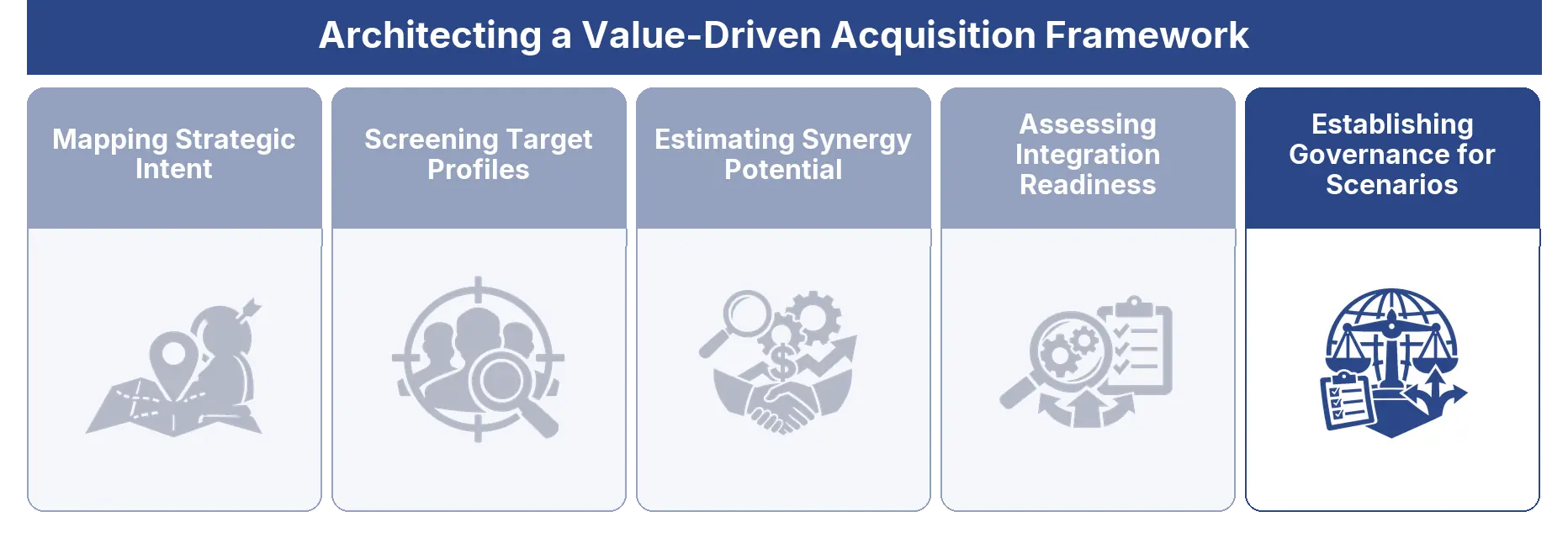
Establishing Governance for Scenarios treats governance as a dynamic capability rather than a fixed checklist. A formal governance cadence, decision rights, escalation paths, and a steering committee structure are needed to adapt to evolving scenarios and learnings. The Cisco-Splunk combination demonstrates the value of a structured, cross-functional governance approach that aligns security, data, and product priorities across the post-close horizon. Cross-border and alignment challenges persist, and programmatic acquirers delivering steady value demonstrate governance’s role in sustaining performance over time. The governance framework should embed scenario-based playbooks, ensuring that the screening triggers the right portfolio mix and the pace of execution remains calibrated to realized value. In practice, governance patterns can be reinforced by referencing the integration discipline framework to maintain continuity across decisions.
Synthesizing Acquisition Strategy Across the Deal Continuum
The synthesis emphasizes that growth aspirations must drive acquisition strategy, beginning with a precise articulation of target growth, market bets, and capability gaps the deal should close. The approach threads three pillars into a Value-Driven Acquisition Framework: objective criteria aligned with growth ambitions, quantified synergy hypotheses across revenue, cost, and strategic benefits, and a governance cadence with explicit decision rights. That framework turns strategic intent into disciplined action across five interdependent dimensions and anchors post close momentum with Day One readiness. Diligence yields a concrete integration blueprint, and governance ensures the deal thesis translates into measurable value rather than organizational drift.
Forward look: The disciplined practitioner converts the framework into an operating rhythm by codifying objective criteria, anchoring synergy hypotheses in revenue, cost, and strategic value, and appointing a formal Integration Management Office (IMO) with clear decision rights. Day One readiness becomes the baseline, ensuring auditable functional requirements and synchronized transitions across functions. Data scope aligns with strategy, enabling ongoing measurement of value capture and course corrections as market realities shift. With these elements in place, the deal thesis matures into durable competitive advantage rather than a one-time portfolio reallocation.

Get new articles by email
Insights on M&A, revenue growth, and business transformation, delivered occasionally.