Aligning Corporate Strategy with Acquisition Strategy: A Governance Blueprint
In 2016, Microsoft’s acquisition of LinkedIn for about $26 billion reshaped the software giant’s approach to professional networks. The deal was notable for keeping LinkedIn largely autonomous to preserve its network effects. That autonomy allowed LinkedIn to maintain its distinct culture while integrating core data and login flows. Yet the integration also raised questions about governance, product roadmap alignment, and the pace of synergy capture. Observers watched whether the joint governance would translate deal thesis into realized value.
From the outside, the transaction appeared straightforward, but the post-close period demanded rapid decisions about which assets to integrate first, how to align data and security, and who would participate in the steering cadence. The friction lay in translating abstract strategy into concrete due diligence prompts and decision rights across the deal continuum. When governance is ambiguous, incentives diverge and the value thesis risks erosion. Without a disciplined cadence and accountable ownership, the portfolio can drift away from strategic objectives as market conditions shift. How can corporate objectives be translated into acquisition criteria and governance that sustain alignment across the deal continuum?
Governance must connect strategic intent to the acquisition decision process across the deal continuum. A blueprint that translates corporate objectives into explicit acquisition criteria alignment with corporate strategy and governance rights keeps screening disciplined and transparent. It also embeds the financial discipline of total cost of acquisition to ensure budgets and synergy plans are anchored in reality. The real test is operationalizing this blueprint across the deal continuum.

Mapping Corporate Strategy to Acquisition Criteria
Mapping corporate strategy to acquisition criteria begins with clarifying strategic pillars and translating them into concrete deal objectives. Growth, profitability, and capability expansion anchor the long‑term roadmap and shape the target profile, the preferred deal type, and post‑close priorities. Growth objectives push for expanding addressable markets or accelerating adjacent product lines, while profitability targets translate into disciplined pricing assumptions, realistic synergy expectations, and a clear path to operating leverage after close. Capability expansion centers on technology adjacencies and operating models that enable scale without eroding cultural capital. Governance that binds the pre‑close thesis to Day One execution is essential, a logic echoed in alignment with corporate strategy discussions that guide diligence and screening. The LinkedIn integration approach offers a concrete illustration of preserving strategic assets while enabling ecosystem expansion.
Defining target profiles requires specifying markets, customer segments, and technology adjacencies that align with the long‑term roadmap. Markets should be prioritized by growth trajectories and regulatory readiness; customer segments by penetration efficiency and lifetime value thresholds; technology adjacencies by the potential to unlock self‑reinforcing capabilities or data flywheels. Public deal history reinforces the approach: Oracle’s acquisition of NetSuite accelerates a cloud ERP footprint by combining product taxonomies with a scalable services model, while Salesforce’s acquisition of Tableau extends analytics depth within the platform, and Dell’s acquisition of EMC broadens a portfolio spanning storage, security, and software.
Establishing baseline success indicators and acceptance criteria completes the mapping from strategy to execution. Acceptance criteria should be anchored in quantitative tests such as revenue runway, cost synergies, and Day One readiness, with milestones extending into the value realization period. The discipline includes a formal cost and risk assessment, ensuring budgets and synergy plans reflect reality. Total Cost of Acquisition analysis anchors the investment thesis and underpins governance‑driven reviews and escalation. Prior analyses of TCoA framed the diligence question in a way that supports disciplined decision making, and a rigorous governance rhythm helps ensure the thesis survives integration. This discipline is reinforced by practitioners who emphasize that a well‑defined acquisition thesis must endure the integration phase, guided by a cadence of evidence‑driven reviews. For further grounding, see the linked work on Total Cost of Acquisition analysis and related governance discourse in the field, including M&A Growth Strategies and Mastering Post-Merger Integration.
Macro‑context underlines the importance of disciplined pre‑deal planning and governance. Markets channel capital to the best‑positioned platforms, as shown in the growth of alternative assets and global fund assets in recent years. In this environment, dedicated governance and an active Integration Management Office increase the likelihood that strategy translates into value. Public deal history reinforces the point: Microsoft’s LinkedIn, IBM’s Red Hat, and Salesforce’s Tableau exemplify how pillars, profiles, and criteria shape governance and execution in practice. External research further supports a governance‑driven path to value creation, aligning the M&A program with a defined growth mandate and a clear integration roadmap. The real test remains translating these design principles into Day One readiness and enduring performance across the portfolio.
Clarifying Governance Gaps Across the Deal Continuum
Clarifying governance gaps across the deal continuum reveals a recurring pattern: decision rights and ownership are not consistently defined across screening, diligence, and validation, leaving critical gates underinformed and misaligned with the strategic bets behind each transaction. When screening criteria are ambiguous or missing, decisions drift toward momentum rather than portfolio logic, eroding the link between the growth thesis and the actions that realize value. Ambiguity about how pre‑deal findings translate into post‑signing integration priorities leaves Day One readiness undercooked and slows cross‑functional action when execution begins. Public deal histories illustrate these governance choices in practice. For instance, the Microsoft-LinkedIn deal demonstrated a deliberate retention of LinkedIn’s operating autonomy to safeguard its network effects, while the IBM-Red Hat acquisition reinforced open‑source culture through preservation of operating norms, and Salesforce’s acquisition of Tableau anchored analytics within the broader platform. These cases underscore the imperative for governance discipline to span from initial screens through value realization, not merely at the point of approval.
External research reinforces the consequences of governance gaps across the deal continuum. Deloitte emphasizes that due diligence cannot stand apart from governance oversight and warns against a set it and forget it mentality; periodic board updates should anchor large acquisitions and tie progress to ongoing governance conversations. In the governance literature, transfers of governance standards post‑merger often converge toward higher benchmarks, but only when gaps are actively managed; the portability of governance standards within merged portfolios shows governance can travel, albeit with residual cultural and regulatory friction. Public statistics underscore governance as a central design question: Corporate Development 2013 survey data show a majority of respondents report a clearly defined M&A approval process, and governance dynamics grow more pronounced when the bidder brings stronger governance to the deal. Taken together, these insights point to a governance‑driven path to value rather than a transient diligence artifact. See also broader cross‑border governance work for patterns that scale with deal portfolios, including analyses of governance transfers and the portability of firm governance standards across entities.
To translate these findings into practice, a disciplined cadence is required to bind pre‑deal work to post‑signing priorities via explicit decision rights and measurable gates. The Integrated Management Office can anchor end‑to‑end orchestration, from screening through value capture, while structuring pre‑deal work to feed Day One readiness and ongoing integration priorities. Practitioners should embed the Total Cost of Acquisition analysis as a standing capability, linking price not only to the run rate implications but to the governance costs of integration itself. Alignment patterns emerge most clearly when the governance framework is anchored to specific, repeatable mechanics: structuring due diligence, Navigating megadeal divestitures, and Mitigating megadeal divestitures. Real‑world deals also offer explicit lessons: the Microsoft-LinkedIn, IBM’s acquisition of Red Hat, Salesforce’s acquisition of Tableau, and Cisco’s acquisition of Splunk illustrate how governance design shapes post‑deal performance and cross‑portfolio integration outcomes. These examples reinforce that governance is not a one‑off check but a continuous discipline that scales with the deal portfolio. See also the governance literature on cross‑border and portfolio integration for additional context on how standards travel and adapt in practice.
Establishing a Governance Framework for Acquisition Alignment
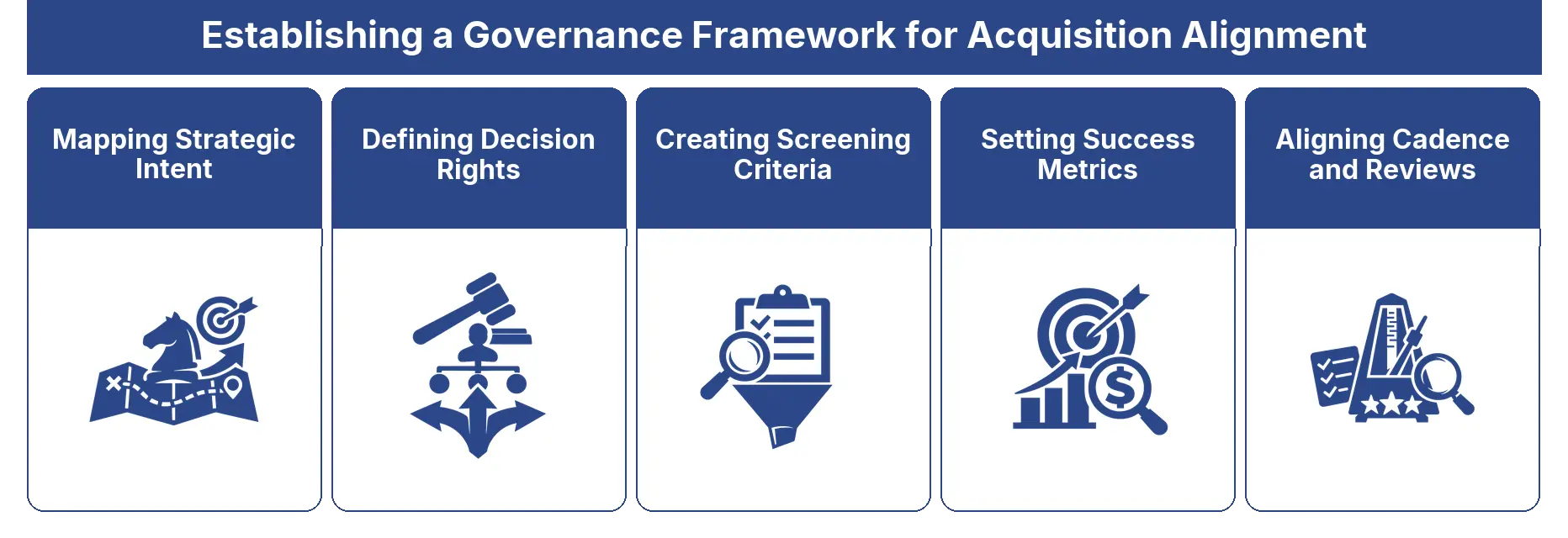
Governance for acquisition alignment converts intent into a disciplined set of filters, gates, and rhythms. A robust framework links the acquisition thesis to explicit criteria, clearly defined decision rights, and a cadence that keeps reviews timely and outcomes measurable. This section develops a governance blueprint by outlining five core elements that executives can operationalize across a deal portfolio, from pre-close screening to Day One execution and ongoing value capture. Real-world deployments, ranging from Microsoft’s acquisition of LinkedIn to IBM’s Red Hat integration, illustrate how design choices in governance shape post-close performance and portfolio outcomes. Stillwater Capital describes alignment with corporate strategy as the essential first question, a framing that underpins the criteria and the governance skeleton. The practical implication is clear: governance must be a live discipline, not a one-off compliance exercise, with explicit linkages to strategic intent and measurable outcomes.
Mapping Strategic Intent
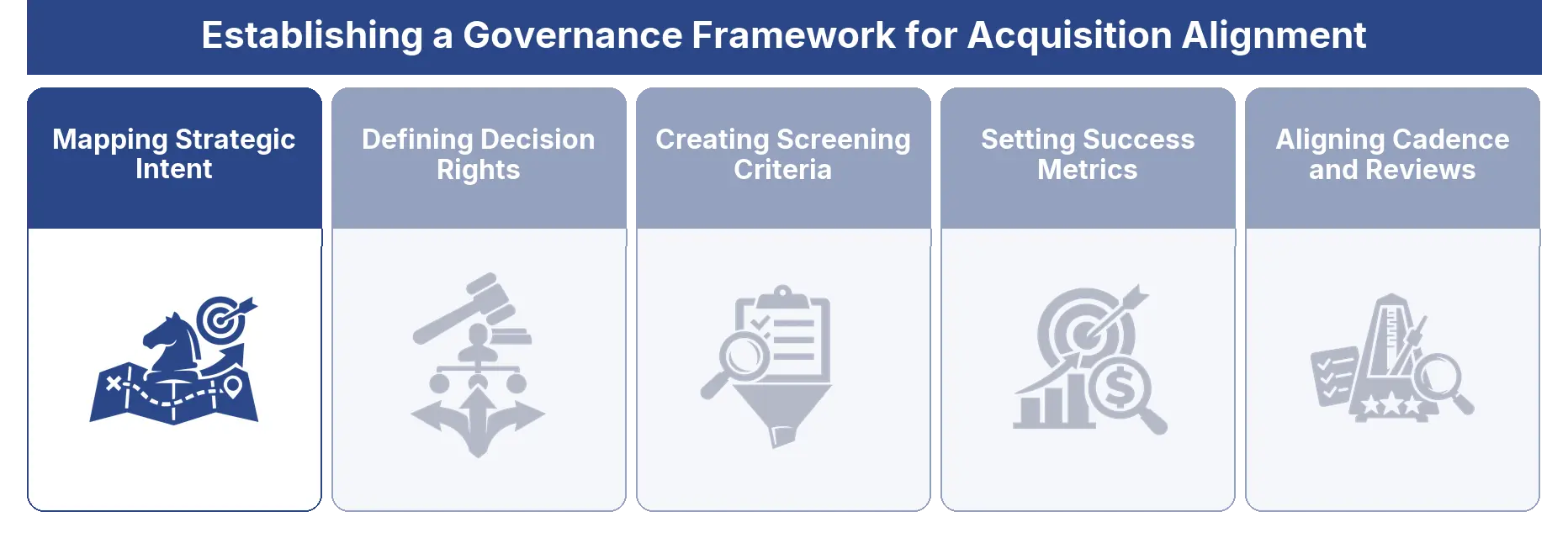
Effective governance starts by translating strategic intent into concrete criteria that survive execution pressures. The approach binds the deal thesis to a concise set of evaluation levers, strategic fit, value drivers, cultural and operating-model compatibility, and integration potential. The Microsoft-LinkedIn deal provides a concrete illustration: a $26 billion acquisition pursued to anchor a broader network strategy while preserving LinkedIn’s operating autonomy, a reflection of governance decisions that protect core value drivers. Public governance thinking emphasizes that alignment with corporate strategy is the essential first question in scalable decision making, a construct that guides prioritization and resource allocation across the portfolio. The governance skeleton should be codified in a short charter and embedded in the Integration Management Office (IMO) so that Day One actions and longer-term milestones trace back to articulated intent. For practitioners seeking to strengthen this link, see how disciplined go-to-market governance translates strategic intent into measurable revenue outcomes. Integration discipline anchors this discipline in a durable operating rhythm. A second reference point is the tangible cost discipline described in the cost-focused Ma integration piece, which reinforces that intent without a cost-aware plan will drift.
Defining Decision Rights
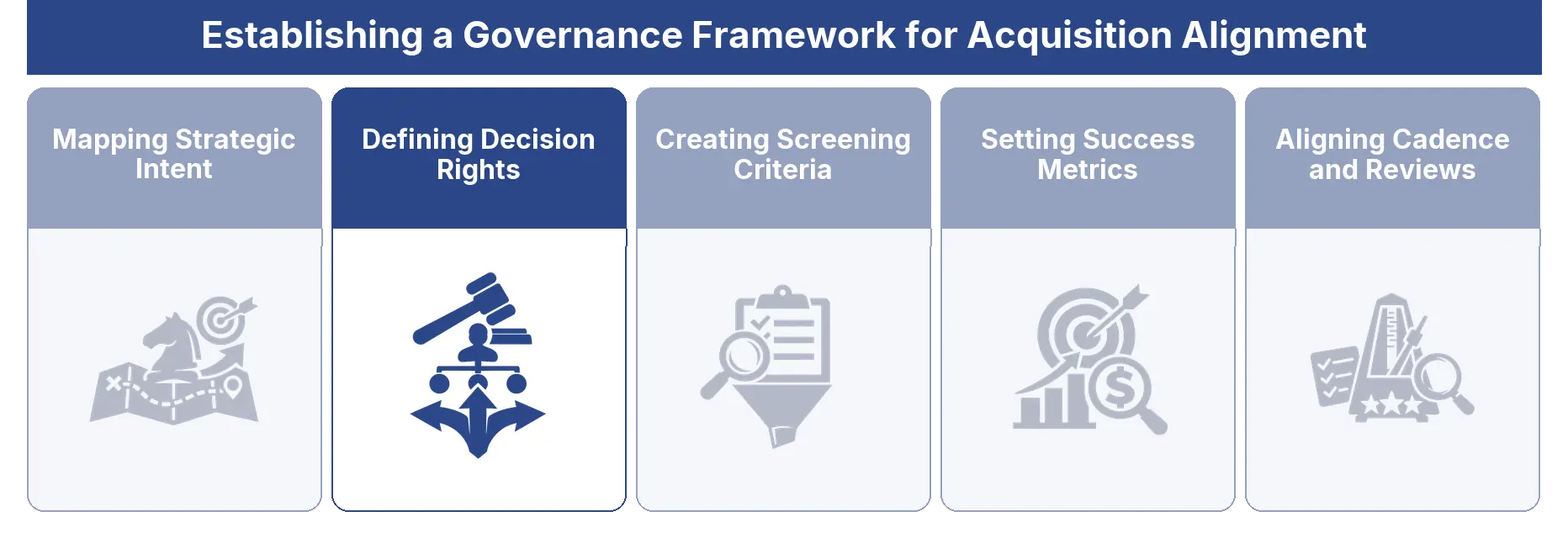
Clear decision rights are the backbone of governance, specifying who decides what at each milestone and who bears accountability when the thesis shifts. A formal decision-rights map should distinguish Day One gating, budget approvals, scope changes, and post-close governance transitions, ensuring handoffs between Corporate Development, the IMO, and the operating units are unambiguous. IBM’s Red Hat acquisition example underscores how governance choices around autonomy and integration mandates can preserve open-source culture while accelerating platform convergence, a pattern worth emulating in large-scale migrations. The governance charter should spell veto rights, escalation paths, and the cadence of steering committee reviews; without these, tension across functions becomes the default operating rhythm. External governance thinking echoes that multi-stakeholder oversight improves investment outcomes, a claim supported by public policy and procurement governance work that emphasizes structured panels and formal reviews.
Creating Screening Criteria
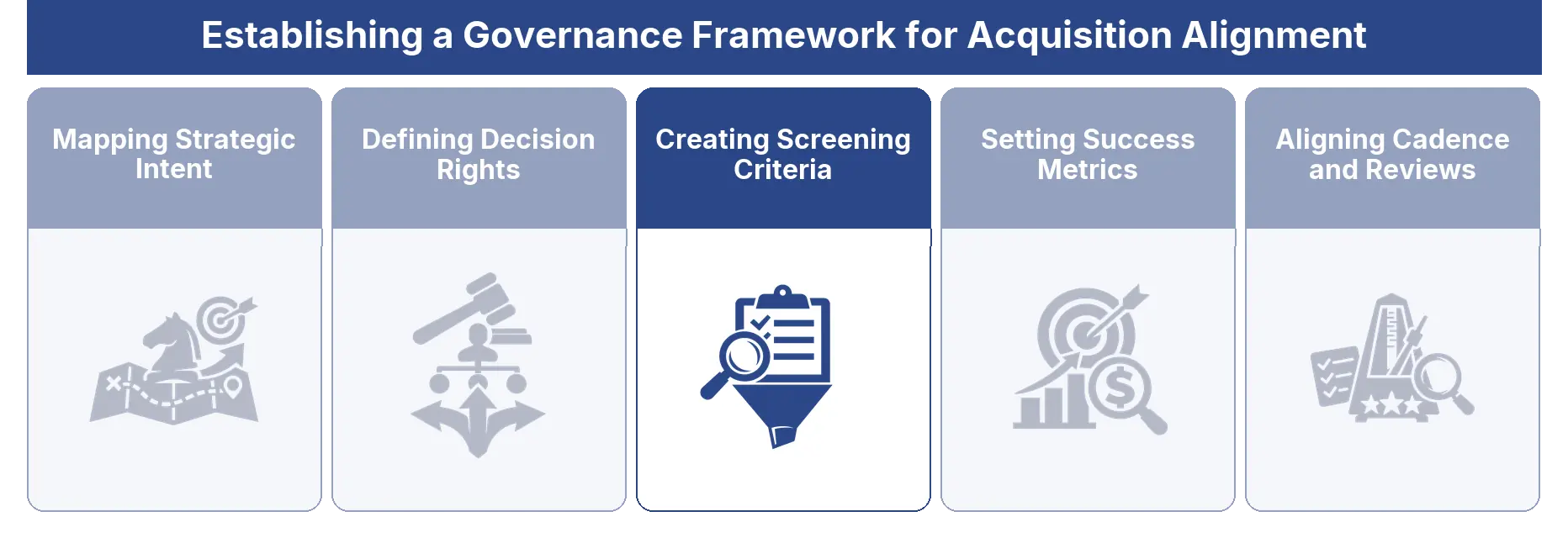
Screening criteria translate intent into a practical screening checklist that screens out value-destroying moves while surfacing true value opportunities. A robust pipeline uses four to five non-negotiables: strategic fit, customer value, operating-model compatibility, data and technology synergy, and risk profile. Salesforce-Slack demonstrates the value of aligning capability additions with platform strategy, where screening criteria prioritize complementary data and collaboration layers so the combined unit can realize cross-sell and usage synergies. Disney-Pixar further illustrates that screening for cultural fit and creative autonomy is essential when the target’s distinctive ethos underpins value creation. The screening framework should be public-facing within the IMO charter, allowing cross-functional defense of decisions and rapid triage of non-starters. Internal governance references anchor this practice in prior JCS work on integrating roadmaps and screening criteria for disciplined execution, such as the tangible costs of M&A integration and integration strategy foundations.
Setting Success Metrics
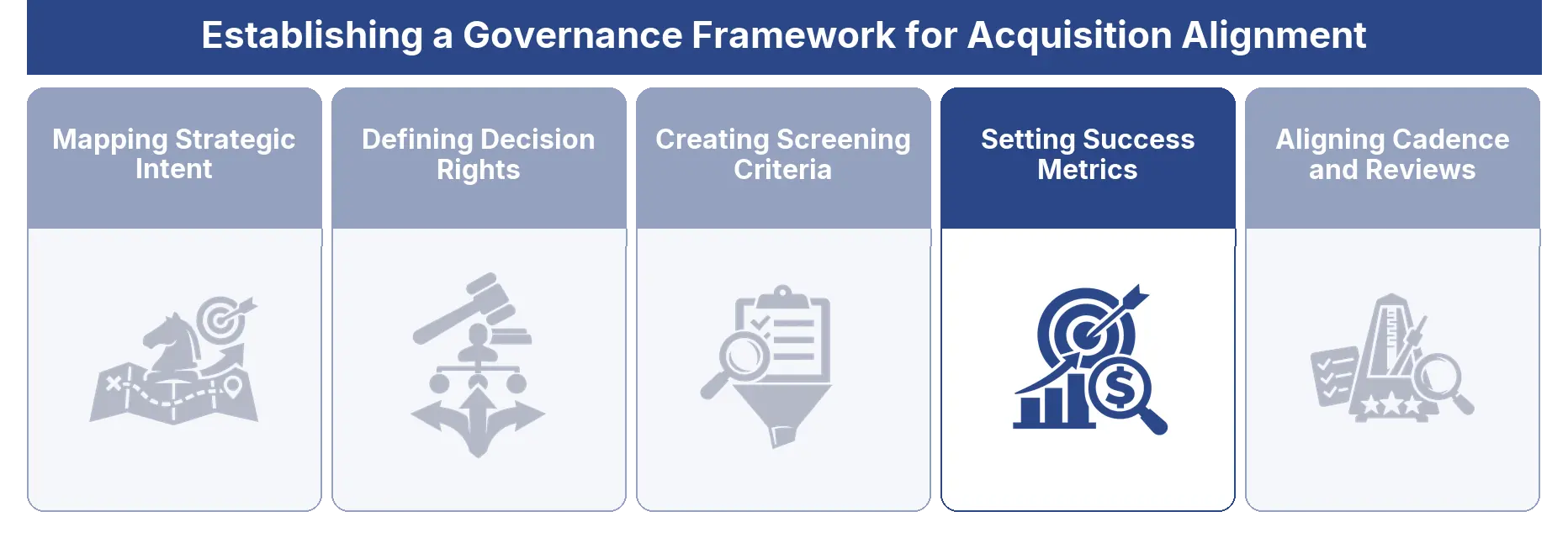
Metrics tether the governance framework to real-world outcomes and force disciplined action when the thesis weakens. SMART KPIs aligned with strategic objectives are indispensable for guiding cross-functional ownership and accountability. The discipline begins with a clear articulation of success at Day One and extends into ongoing value capture through cadence-driven governance, with milestones tied to revenue, cost, and capability integration. Public deal histories illuminate the stakes: Dell-EMC’s $67 billion transaction and Amazon-Whole Foods’ $13.7 billion move showed that setting tight, outcome-linked metrics helps prevent scope creep and supports faster realization of intended synergies. The governance blueprint should embed a performance dashboard that aggregates financial, customer, and operational metrics, while ensuring that data quality and access controls are part of the ongoing review. Prior industry analysis work on integration economics offers a practical template for linking milestones to realized value, especially in the interplay between synergies and integration costs.
Aligning Cadence and Reviews
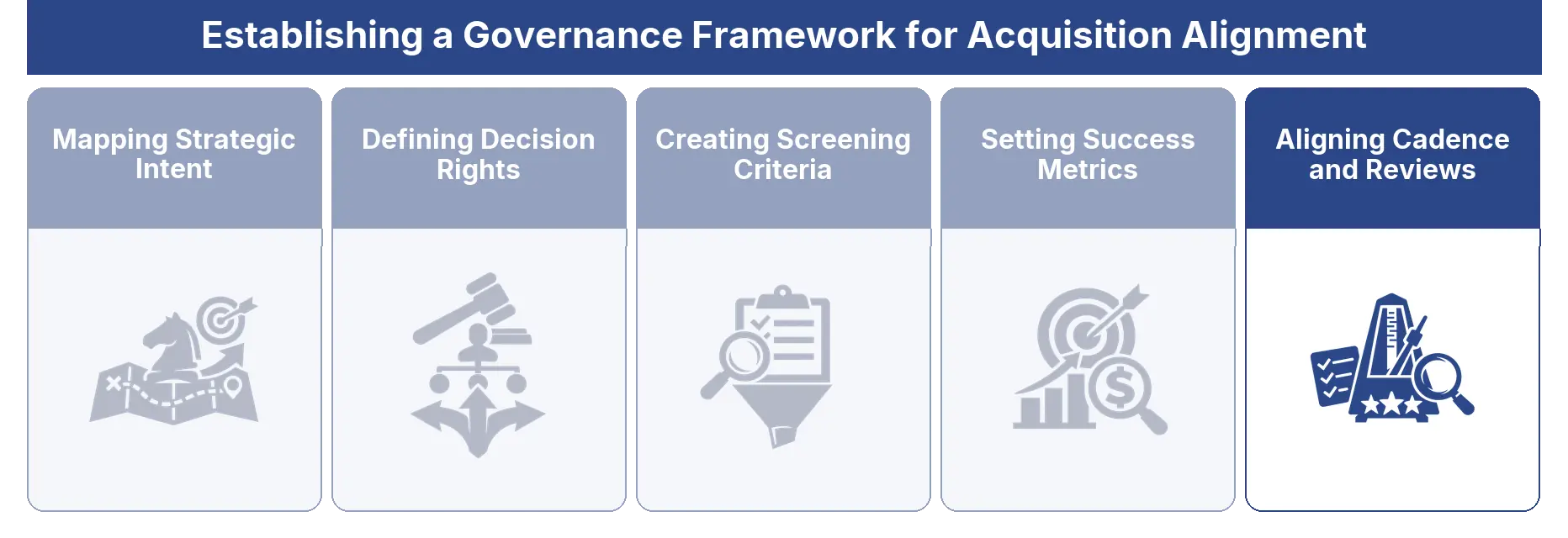
Cadence turns intent into discipline. A synchronized cadence across diligence, planning, execution, and value capture ensures that decisions reflect current realities rather than original assumptions. Governance cadences should be designed to escalate issues early, with regular steering‑committee sessions, quarterly portfolio inspections, and a Day One readiness review. Public governance playbooks emphasize that a centralized coordination office improves the speed and quality of decisions as a deal portfolio scales; the White House procurement governance framework illustrates how multi-disciplinary advisory panels can be leveraged for alignment at critical decision points. Cisco-Splunk provides a recent benchmark where ongoing governance framing influenced cross-functional collaboration and post-close integration, highlighting the real value of cadence. The operating rhythm should be anchored in a durable IMO cadence, with a standing cadence for major milestones and a flexible, but explicit, escalation path. A disciplined cadence also supports continuous improvement, allowing governance to adapt as learning surfaces across deals. The anchor for this cadence is the principle that governance is a continuous discipline, not a one-off project.
Synthesizing Governance Across the Acquisition Lifecycle
Clear linkage between corporate strategy and acquisition activity is the essential lever for value realization. Translating strategic pillars into concrete deal objectives creates governed pathways for screening, diligence, and validation. Governance gaps repeatedly undermine this link; decision rights and ownership are not codified across the deal continuum, leaving the deal thesis exposed to drift. A disciplined governance blueprint turns intent into a rhythm of filters, gates, and reviews that keeps every transaction aligned with the transformation agenda and the expected synergies.
With this blueprint, disciplined practitioners begin Monday by translating four pillars into explicit deal objectives and mapping each objective to gate criteria across screening, diligence, and validation. The governance architecture should mirror the transformation agenda, establishing an Integration Management Office (IMO) cadence, RIDD log discipline, and milestone ownership to prevent drift. The approach echoes the blueprint for M&A success, reinforcing that governance translates intent into action. It emphasizes quantifying the cost of integration up front and anchors decisions to a working view of the total cost of acquisition analysis. The integration discipline framework ensures consistent ownership across work streams, keeping synergy capture tied to strategic bets rather than project inertia.
Governance is a capability, not a ceremony. The real test lies in pace, translating intent into value as operations begin the workweek.

Get new articles by email
Insights on M&A, revenue growth, and business transformation, delivered occasionally.